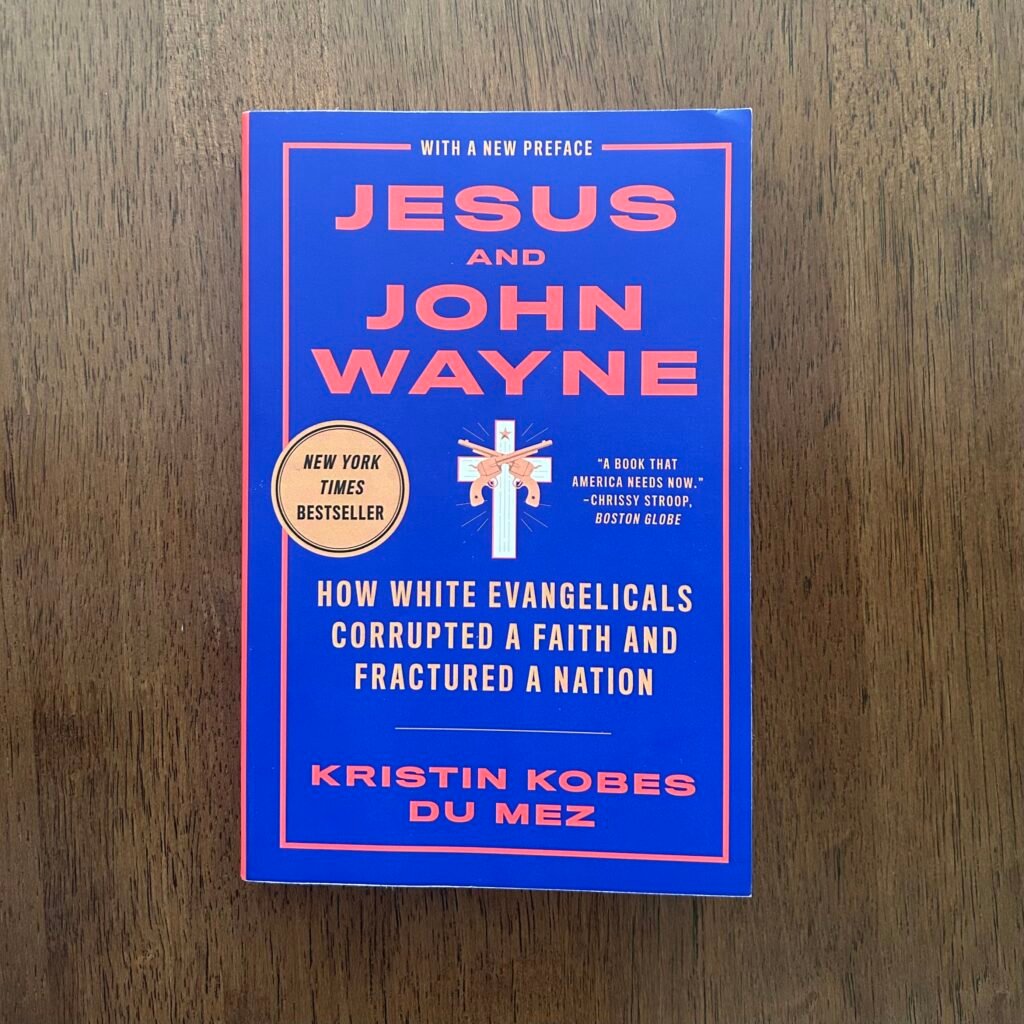
Du Mez writes a history of how Evangelical Christianity has interfaced with politics and become obsessed with (non-Biblical) displays of masculinity.
This book presents the Evangelical movement, particularly as it developed from the 1980s as more of a cultural movement linked to certain media consumption as the defining feature of the “Evangelical” voting demographic to explain how a religion-affiliated political movement came to define American Christianity. Largely, Du Mez is focused on voting patterns that claim to be religious but focus on gender roles and conservative politics above all else.
The book looks at a few major movements: Evangelicalism from the 1920s through the 1960’s (finding John Wayne), the Cold War (Oliver North), and the war on terror through the modern era (“spritiaul warriors” and sex scandals galore). The main takeaway is the extended long-game that’s been played between conservative Evangelicals despite different movements rising to power across the decades. When there isn’t a war, the movement has been concerned with gender and whether American men are masculine enough.
A historical argument is being made which leads to some one-sided exploration of how focusing on traditional gender roles led to scandals over predatory pastors which should be a consideration when reading this; this isn’t meant to be a non-thesis look at the Evangelical movement.
If anything is seriously missing from this work it’s higher education. The Falwell’s certain make their appearances, as does homeschooling, but there is little to be said about the rise of institutions like Liberty University and the many loosely accredited Christian colleges.
Listen: “Jesus and John Wayne” (googly eyes, Joy Oladokun, August Ponthier), “Jesus and John Wayne” (Gaither Vocal Band)
Leave a Reply