Blog

  • Just Read: “A Green Equinox” (Mavor)

    A 1973 Booker Prize finalist reprinted by McNally following a bookseller–Hero Kinoull–who falls in love (romaticly) with her lover’s wife and then (platonically) his mother. But really the only main plot point is that there is a seminar to be held on Rococo art and an outbreak of Typhus. 

    This is really a novel following Hero’s departure from the seemingly serious masculine world of literature and preservation (she moonlights in book binding/restoration) and into the feminine worlds of volunteerism and gardening. All of these stages take place through the conduit of one of the other characters who she becomes obsessed with. Really it’s a novel about finding a sense of identity in a time that feels unmoored (written in the 70’s but set at the dawn of WWI). Hero fights from backward-looking cynicism towards some degree of hope.   

    This is a witty book of English style and French character. It may no longer be as transgressive or shocking as the early reviews seem to indicate but the core is still good. While the plot description seems like this may be a fun drama, it’s really a quite serious book (although still funny) with good writing (although it feels very “film-like” through fast scene changes and sharp transitions between reflection/poetic descriptions/dialogue). 

  • 20250504 Sourdough Sunday

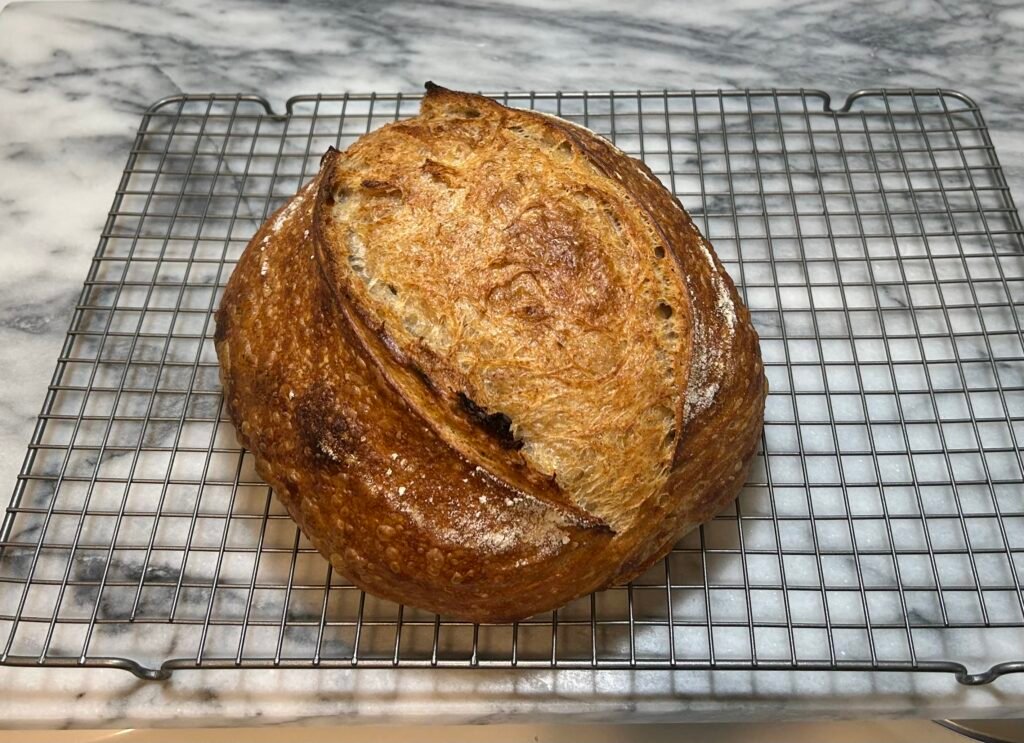
    A little departure from the usual with some oatmeal sourdough (recipe). There is cooked oatmeal inside as well as oats on top (which taste good but causes a mess). Gluten development is always challenging with oats mixed in which can lead to a flatter loaf but has a very moist crumb.

  • Just read: The Wall (Haushofer)

    Sci-fi in premise (but really to the extent of “Never Let Me Go”) Haushofer’s “The Wall” follows two years in the life of a woman who survive an event that kills everyone outside of her wall. The wall is invisible but real and didn’t seem to exist before the event. 

    She is trapped in the mountains where she had been staying with a friend. She is accompanied by a hunting dog, a cat, and a cow. With few supplies or food she must quickly learn to provide for herself and the animals. 

    What comes out is a meditation on life without the imposition of modern expectations, obligations, and rushing about. What’s left is not only survival, but finding comfort and providing care. The inclusion of animals is particularly important as it shows a tendency towards the collective once human ego and social power dynamics are stripped away. The sense of freedom becomes quite skewed as does the sense of urgency and obligation. 

    (This novel has become somewhat relatable in unfortunate ways as we enter a third day without power) 

    This is a dense and reflective novel written as a continuous recounting of the preceding two years. In some sense the writing lacks conventional structure with only some elements of foreshadowing to provide momentum. It’s understandable given the subject but makes it less engaging. 

    “The Wall” is a well written, unique novel which has not gotten its share of attention.

  • 20250427 Sourdough Sunday

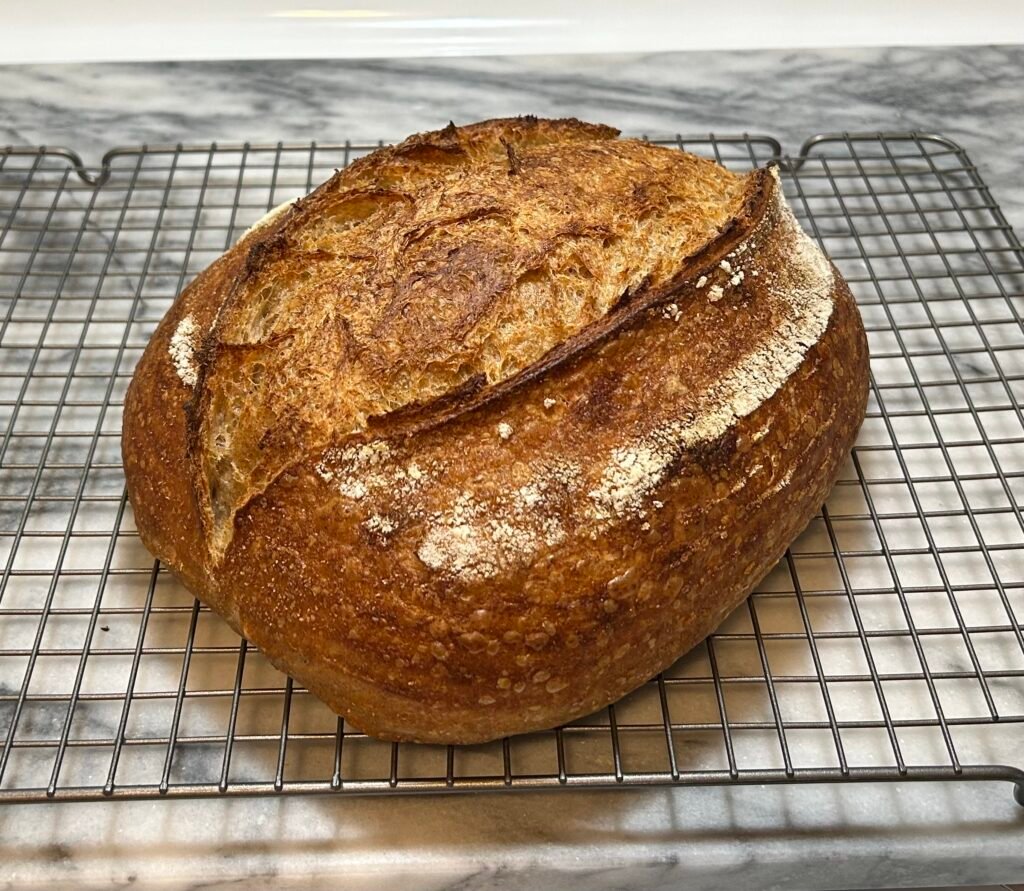
    Warmer weather and warmer temps inside had this one getting away from me a little. A bit over-fermented and under-strengthened. This is probably the sign that sourdough season will be coming to an end soon as it gets hot out.

  • Just read: “The Woman in the Dunes” (Abe)

    A man goes in search of undiscovered sand beetles and ends up captive in a dune-bound house where his only task is to help the owner shovel sand into buckets to be removed from the dune-bottom.

    This is a semi-surreal existentialist novel is generally about the search for meaning in our work (both independent and collective) and how it relates to our sense of belonging. But it also provides a propulsive plot and an interesting scenario, along with some information about sand and beetles. Needless to say, a lot is packed into this fairly short and very strange novel. It presents both as utterly bizarre and unsettlingly familiar.

    This novel was a breath of fresh air and has earned a spot among my favorites–next to “The Box Man.”

  • 20250413 Sourdough Sunday

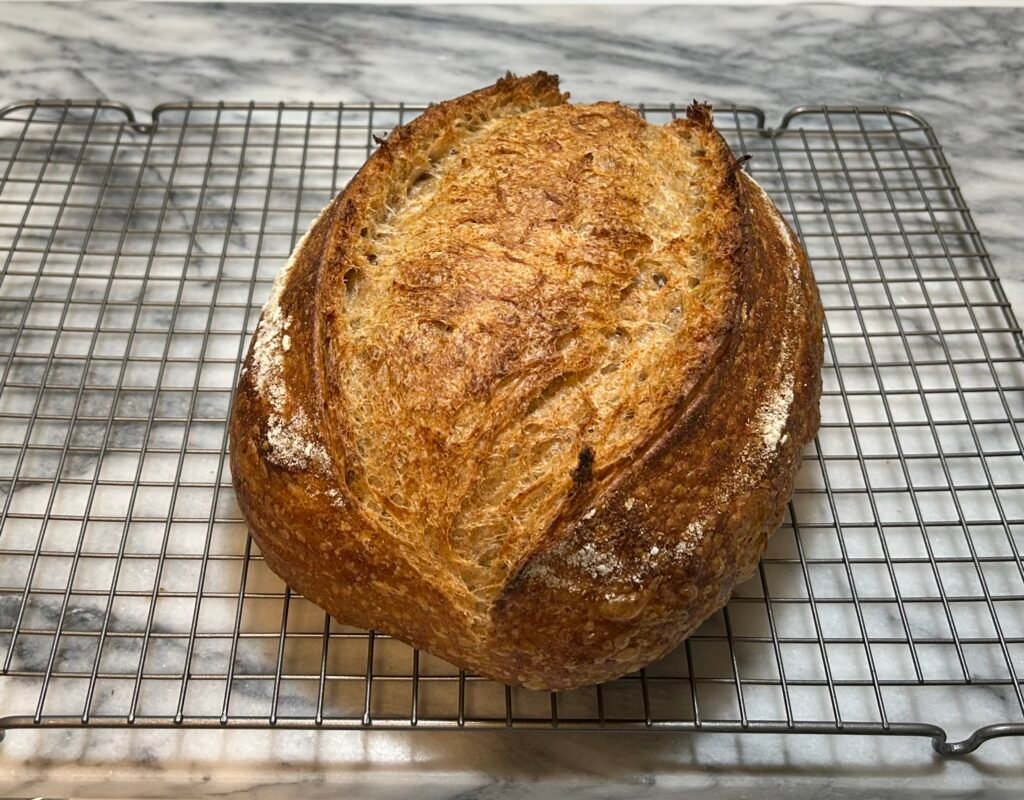
    A bit of a low effort entry thrown together after a 5K and brunch. Feels like a good density but went a bit more outward than upward during the bake.

  • Just read: “A Portrait of the Artist as a Young Man”

    This is a tough little novel capturing scenes from a few points in young Stephen Dedalus’s life relating to his decision/conviction to become an artist.

    In between arguments full of slang/references to events in turn-of-the-century Ireland and highly technical musings on certain details of theologians (much of which was lost on me, even with the copious footnotes) there was some of the most unique and lyrical prose I have ever come across and some of the most stunning chunks of writing generally.

    This novel deals with duty, shame, and the role of the artist (both inward and outward). It is thematically rich without feeling preachy and it contains a lot of very inventive writing without seeming overdone.

    Admittedly, much of the plot is quite vague and it takes a minute to really catch up with what is going on, especially between chapters. Of course, here it isn’t terribly important to the work as a whole but it adds a level of difficulty to an already challenging novel.

    I’m glad I read this and enjoyed many parts of it–but this might have been a little beyond me to tackle without guidance.

  • 20250406 Soudough Sunday

    A sluggish starter countered with a long banneton proof at room temperature before the overnight fridge ferment. Correct or not I was impatient and it seemed to work out alright.

  • 20250330 Sourdough Sunday

    This week really got ahead of me so the starter was a bit underfed and not terribly active. Long fermentation without a ton of volume. Nice crust color but a bit uneven.

  • Just read: “Chess Story” and “When We Cease to Understand the World”

    Without intending to, I read these short fiction works successively in just a few days.

    Both works are tales of intellectual obsession that give rise to some combination of madness and genius occurring within the milieu of the World Wars.

    “Chess Story” details the passage of a chess champion to Argentina during which a few of the passengers become interested in challenging him to a match. They have poor luck until a strange man who, claiming not to have touched a chess piece in 25 years, is able to outwit the master. The work goes on to focus mainly on events in the past that contributed to his chess skills.

    This is a sensitive and seemingly simple short story that contains a lot of humanity below the surface (mostly related to how poor treatment, in various forms, contributes to less than desirable personality traits).

    “When We Cease to Understand the World” is an interesting construction of several fictionalized (maybe narrativized) stories following the great discoveries of several scientific and mathematical geniuses. The stories often focus on periods of dangerously intensive, hermetic work leading to major breakthroughs that shape how we understand reality (quantum physics being the namesake section).

    I have mixed feelings about this work. Generally, I like the experiment of constructing fictionalized accounts of very real events in a way that feels very humanizing and doesn’t take such clear opinions as most biographical accounts will take. Really there is seemingly an effort here to include many of the bad traits along with the good, both in terms of their place in history but also in what is known about their personalities.

    One major aspect that I don’t tend to like is the way that fictionalization takes a stock standard approach in lauding the sort of hermetic/obsessive genius who is so caught up in their work that they work non-stop in fits of inspiration to come up with their masterpiece. Of course these are stories that we like to read and conceptions of genius that people are often fascinated by (along with what is probably some selection bias towards famously hermetical mathematicians). But I am often not thrilled with this being the major narrative for important scientific discoveries as this is much more the exception than the rule. I find this narrative a bit stale and wishes that it received a little more scrutiny.