Blog

  • Just Read: “The Suicides” and “The Myth of Sisyphus”

    “The Suicides” opens with a quote from Camus so I figured it was time to stop putting it off. 

    I received “The Suicides” from the NYRB Classics Club subscriptions that I had last year (which have mostly just gone to a colorful stack). Can’t say why I chose this over the others but I’m glad that I did. 

    The book opens like “The Stranger.” An unnamed narrator realizes that he’s about to turn 33–the age his father committed suicide. As a journalist trying to sell stories to magazines, his boss assigns a story about three suicides with no information besides pictures. He spends the remainder of the novel trying to find details from the three pictures while also following new suicides in the region. He is quick to ask favors and put others in uncomfortable positions to find any small amount of information. However, he’s much more interested in the women he meets along the way (though not his girlfriend) while he spends time at the fights of movies.

    The writing is sparse and interspersed with statistical studies of suicide from one of the characters. The story moves and reaches conclusions in a way but generally is very stagnant. The narrator feels trapped for most of the novel with only a few glimmers of hope. Other reviews connect this to the political state of affairs around this time in Argentina. 

    Maybe the situation reaches Camus’s absurd where the narrator finds little reason to continue living or go along with any typical role. At times there is passion and revolt, but hardly freedom. Certainly his job is Sisyphean. But maybe the situation is more Kafkaesque which, according to Camus, is too hopeful to capture the absurd, but somehow “The Suicides” might also have some hope. 

  • Just Read: “Vera, or Faith” (Shteyngart)

    Gary Shteyngart’s new novel shows a marriage falling apart from the eyes of a ten year old in the milieu of a fascist America somewhere in the relatively near future. Vera is trying to navigate school and friendships in a “gifted” education system full of high expectations and entrance exams largely motivated by her step-mother who clearly prefers her younger brother. Conversations about this with her AI chess set convince her to try to find her birth mother in Ohio (where she met her father in college at “the school of fading repute” which is definitely not Oberlin). While this is happening her father is trying to sell his magazine to someone who doesn’t like its general political direction so they can go from having “cultural capital” to “capital capital.”

    I read “Our Country Friends” in ~2022 and thought it was good, all things considered. There are a lot of similar characters here: pretentious writer husband with a borderline drinking problem that resembles the author, exasperated wife, Korean-American daughter, strained relationships all around. And apparently the “cultural capital” vs “capital capital” thing is a bit of a leitmotif for Shteyngart. Which is all to say that this feels almost like a continuation of some previous works despite the plots being non-connected. 

    But it’s been a few days and I’ve really forgotten about most of it. Maybe I prefer Shteyngart’s “reporting” for the New Yorker or the Atlantic (on martini’s and probably tax write-off luxuries)–here the wit and “Russian pessimism” really shine. Nothing wrong with novel and I enjoyed it, but it won’t stick with me and that’s fine.  

  • Just Read: “Perfume” (Süskind)

    A modern fable of a boy with an incredible sense of smell but no scent of his own. “Perfume” follows Grenouille (Frog) from his abandonment at birth through his childhood in ~foster care, adolescence as a tanning then perfume apprentice, time in isolation, and finally early adulthood learning enfleurage to make his ultimate perfume.

    A main theme through this novel is how the often imperceptible sense of one’s smell contributes to their identity and perception by others. Since Grenouille gives off no scent, he is not perceived and found to be unsettling when people see him. Upon realizing this, Grenouille sets out to create the ultimate scent so others will perceive him as beautiful.

    Writing in third-person omniscient, Süskind provides a sense of gravity and timelessness to the work without much personal introspection from Grenouille. He certainly isn’t an antihero that generates empathy. It’s an uncomfortable and unsettling read but also feels timeless. As a bonus, Süskind provides lots of interesting details about perfumery through Grenouille’s training.

  • Just Read: “A Room with a View” (Forster) 

    Is it a romance or a coming of age novel? Critique of Edwardian manners? Forster’s novel plays a lot of parts for being relatively short length. To add, it feels like a victorian novel that’s been torn back and loosened up a little (not quite modernist). 

    I guess it’s really a novel of conflicts modulated by manners. Lucy is in conflict with her mother, Charlotte, Cecil, and George but not really with her philosopher Mr. Emerson. Charlotte and Mrs. Honeychurch are in conflict with George and Cecil. All of their conflicts have to go through Edwardian customs and concerns of what others may think. 

    Maybe I came in expecting a little bit of a lighter, lusher novel based on the descriptions of the book (and film). This has some weight to it which I wasn’t really expecting. 

    Maybe this is more for the spring than the summer, or maybe my criticism is that LP Hartley’s “The Go-Between” exists.

  • Just Read: “Territory of Light” (Tsushima) 

    Picked this one off of the shelf because it had a nice cover and I had never heard of it. So I went into this not knowing anything beyond what was written on the cover. I had previously read a couple of Mieko Kawakami’s novels and a Murakami during a heat wave last year so I thought it was a good time. 

    This is a short novel covering about 1.5 years in the life of a woman and her child after being left by her husband. It plays out in 12 short (~15 page) chapters which are only loosely connected and extremely sparse in narrative detail. 

    The daughter is acting out (maybe related to the separation), the mother is beyond her capacity to deal with working and raising a child while meeting cultural expectations for motherhood, and the husband is exacerbating the situation. Light and shadows/darkness are one of the most used visual descriptions throughout the book. 

    “Territory of Light” is about a mother trying to find her feet after a separation. It spares no detail about the struggles and missteps. This novel almost feels like a diary of all the unpleasant things that happened during the process which makes it a but of an uncomfortable read at times. Maybe this was more of an interesting read than one that I really enjoyed. 

  • Just Read: “It Can’t Happen Here” (Lewis)

    Dorothy Thompson, wife of Sinclair Lewis was expelled from Nazi Germany in 1934 for her journalism criticizing the regime. One year later, Lewis published “It Can’t Happen Here” as a speculative work about a fascist dictator running for US President and then becoming a dictator. This book largely follows the newspaper editor Doremus Jessup as he reports on and experiences the effects of the campaign and new regime. 

    Lewis’s most famous works–“Babbitt” and “Main Street”–focus on restlessness and middle class ambition in the face of the mediocrity and pressure to socially conform. In “Arrowsmith” he described the slowing of scientific progress caused by bureaucracy and meritocracy. Those works generally proceed slowly and often in a circular manner as characters are caught in traps working against social pressures.  The writing is witty and fully of humorous irony. 

    “It Can’t Happen Here” is quite different. The plot moves much more quickly and maintains story-lines for many characters as well as plot points following the new government. The writing is much more plain and urgent. A lot of time was clearly spent in adapting the politics to the US (the political aspects largely follow Germany) in particular the persistent strain of anti-intellectualism and desire to return to “traditional values.” But largely this offers much less analysis on the American psychology than Lewis’s most famous works. 

    This book is similar to Feuchtwanger’s “The Oppermann’s” (written in Germany in 1933) which follows the rise of the Nazi’s from the viewpoint of a Jewish merchant family. The questions posed are little more interesting with “when should we start to worry” and “how much of these politics can be tolerated.” 

    It’s an interesting novel and well written but not a standout among Lewis’s novels. And there’s the whole question of whether the resurgence in popularity this novel saw in 2016-2017 was justified or a bit alarmist…

  • Just Read: Monsters: A Fan’s Dilemma (Dederer) 

    It’s a book about writing a book about separating the art from the artist. A book about monstrous people who do great things but also an account of the author trying to come to terms and find a way to handle the conflict. 

    I probably wouldn’t have read this book if I knew the format, but luckily I read one of the chapters published in some magazine (Paris Review?). But I’m glad I read it.  “Monsters” gives no clear answers or framework for where to draw the line. Instead, it provides a framework for thinking about these issues. It addresses the thorny issues of “back then they didn’t know better,” redemption, and monstrousness coming from abuse in childhood or from the entertainment issue. Mostly it deals with the idea that great art and bad behavior may be intrinsically linked (and how, historically, this tends to skew masculine). 

    A main focus of this book is the author trying to reconcile her love of Roman Polanski’s films with her disgust over his actions and the admitted tragedies of his life (mother died in the Holocaust and wife in the Manson murders). Much of the conversation revolves around what the films mean to the author personally and takes into account the dramatic shift in biographical detail that is only recently accessible to everyone. There are no easy ways out (i.e. don’t financially support them if they’re alive) and no panacea for all bad behavior. There is a reasonably good take on cancel culture. 

    After some 200 pages of careful discussions about the complications of trying to reconcile behavior and art there is a bit of an unsatisfying conclusion that feels a bit rushed or even unnecessary given the rest of the book. A bit unsatisfying, but there is still a lot to take from this book and it’s wonderfully stand-alone-worthy chapters. 

  • Just Read: Emperor of Gladness (Vuong) and Martyr! (Akbar) 

    Ostensibly very similar novels. Both are semi-autobiographical stories from the early adulthood of poets (turn novelists) struggling with addiction and their American/foreign identity. They both follow depressed young men lacking a sense of purpose and trying to start writing but caught up in the tedium of work and relationships. 

    Vuong’s novel follows Hai who is living with Grazina, an old lady helping her through the throes of dementia while working at a fast food restaurant with an interesting cast of characters. The story largely follows the relationship between Hai and Grazina and his cousin/coworker Sony’s attempts to make bail for his mother and afford a trip to visit his father. 

    Emperor of Gladness examines the struggles and expectations of immigrants along with the struggles of work in the service industry. Nearly every character has a sad backstory and often some dream deferred from illness, medical bills, or general financial instability. There can be no expectations of happy ending from Vuong (hardly a spoiler) but there’s a wonderful sense of beauty in the mundane moments and shared burdens. 

    This is certainly a more stylistically mature novel than “On Earth We’re Briefly Gorgeous” but also feels less urgent and personal. Still very enjoyable. 

    Akbar’s novel follows Cyrus, a young man in recovery attempting to write a novel about martyrdom. He is first occupied by the famous religious martyrs along with his experience of growing up as an Iranian-American in the 2000s. These feelings are enhanced by the death of his mother on Iran Flight 655 and his day job as a medical actor. He is largely preoccupied with death and generally unable to cope with both death and general uncertainty. 

    His feelings about martyrdom change upon meeting with an artist whose last exhibit is to put herself on display as she dies of cancer. Throughout this section, more information about his mother and uncle unfold in the context of the Iranian revolution. The unfolding of these two storylines make up the last third of the book and are fairly propulsive. 

    It didn’t quite work for me. All of the characters seemed to try to hard to liked and to explain their grand struggle and bad behaviors. They ended up feeling a bit flat and overwrought. Many of the ideas presented felt underdeveloped and presented as over profound. It’s not an entirely unsuccessful first novel, but it really felt like a first novel. 

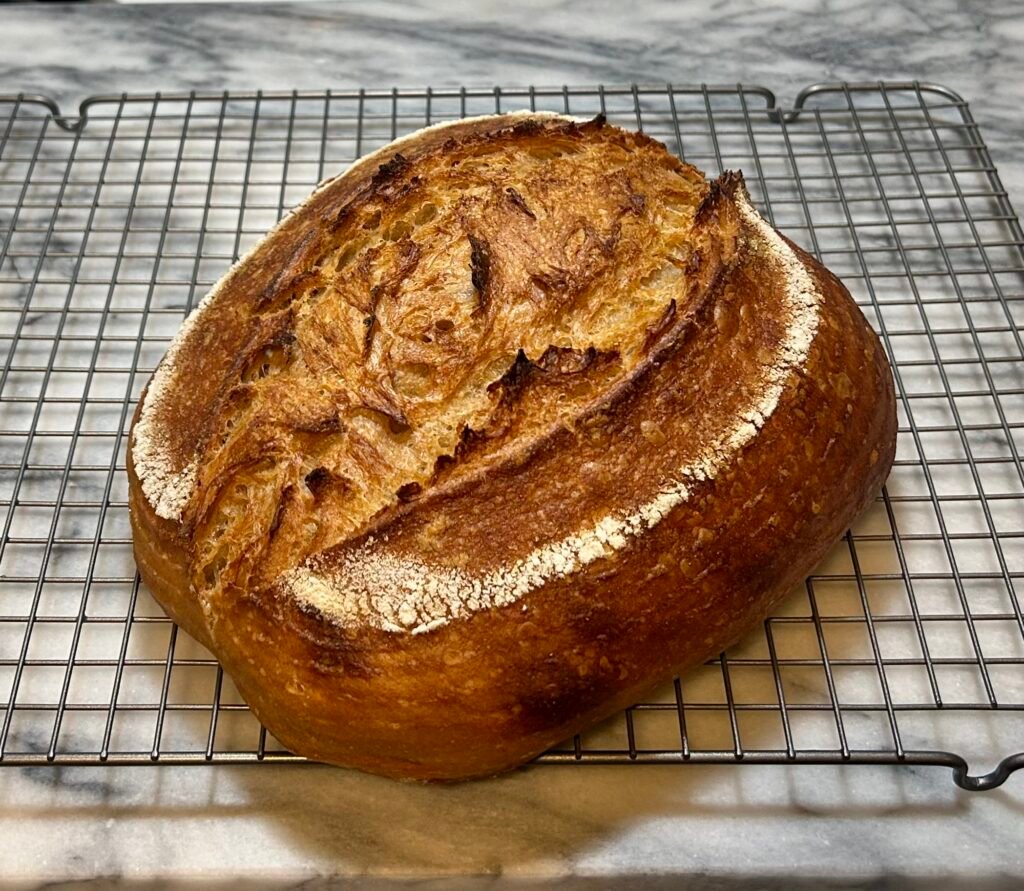
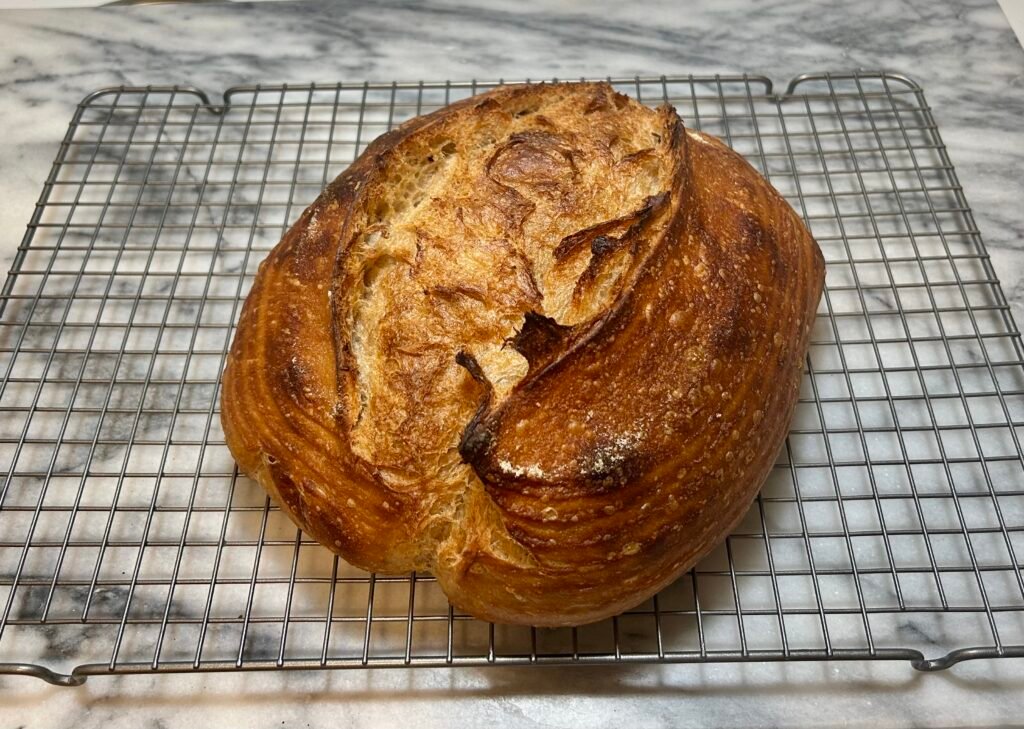
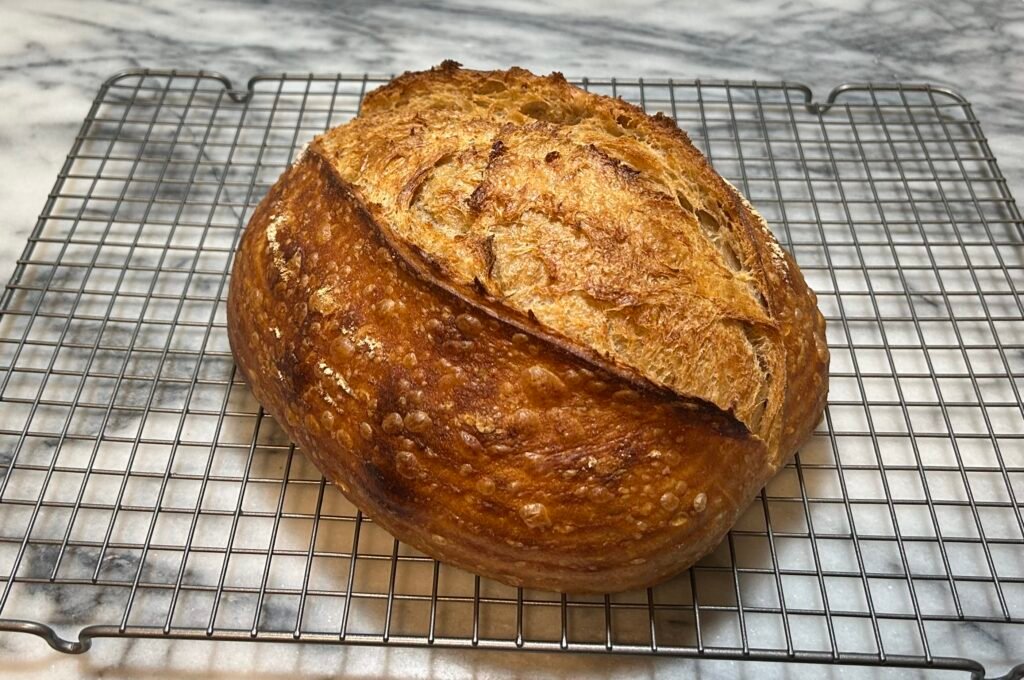
  • 20250525 Sourdough Sunday

    Finished some whole wheat flour and ended up at 30% instead of the usual 50. Whether from the different flour or a longer fermentation this was pretty bubble and light.

  • Just Read “Command Performance” (Echenoz) 

    This short novel is a play of extremes. The plot is parodicly overdone yet the writing is quite casual (no quotation marks here). 

    It’s a detective novel about a middle-aged man fired from his job as a flight attendant without any real skills or prospects. He decides to become a private investigator and ends up getting tied up in a series of events with a minor political party. 

    This novel fixates on class and the role of financial difficulties in consuming a person’s thinking. In particular, when satellite debris crashes into a grocery store, Gerard notes that it’s inconvenient to go to a more expensive grocery store in his neighborhood because he can barely afford it and feels great shame being reminded of this regularly. In fact, his precarious financial state is exacerbated by his decision to become a private investigator (while barely being able to afford Bic pens for his office) but the thought of making money without having to deal with his blemished record is appealing. This desperation leads him into certain difficult circumstances that become nearly inescapable. 

    “Command Performance” is a great short novel that moves quickly but feels like it could be a full-length work. It’s a “genre” type work that’s both serious and playful.