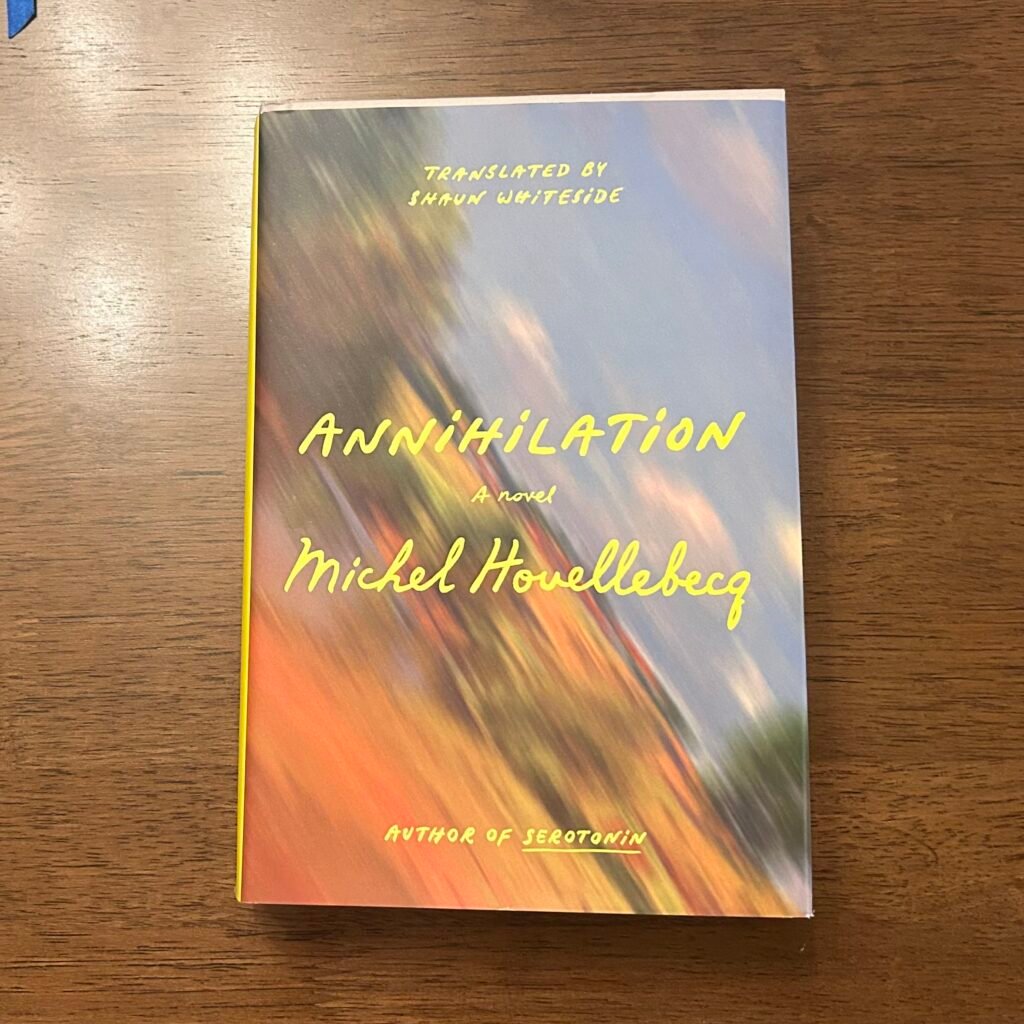
The final (?) novel from France’s controversial but important writer. Here, he is somewhat moderated (relatively) on the shock value in the narrative and moves towards a (almost) wholesome story of the value of relationships and family in the face of a bureaucratic life.
This novel centers around a fairly high-ranking bureaucrat, Paul, who works for an agency head who is quickly rising up the ranks of political power. Paul has no friends and is in a marriage that has turned into little more than a roomate situation when a series of attacks rocks the French intelligence. When his father suffers a stroke, Paul has to pause his political work to help handle the situation with his brother and sister, both of whom are married to less-than-appealing characters.
Houellebecq pivots the novel from a sort of political thriller into a family novel as the family learns to put differences aside and live with each other (or not) and reconnect while helping there father escape a difficult situation in a care facility. Here, the novel become touching at times as people come together during difficult times to lend a hand or shoulder to cry on. Of course, this is Houellebecq so it can’t be too touching without some horrifying twists.
If this is the final work from the (in)famous author, it marks a shift from the crude shock value and nihilistic social commentary toward a future enriched by relationships and strong throughout the most difficult circumstances. But be warned that it’s still Houellebecq…
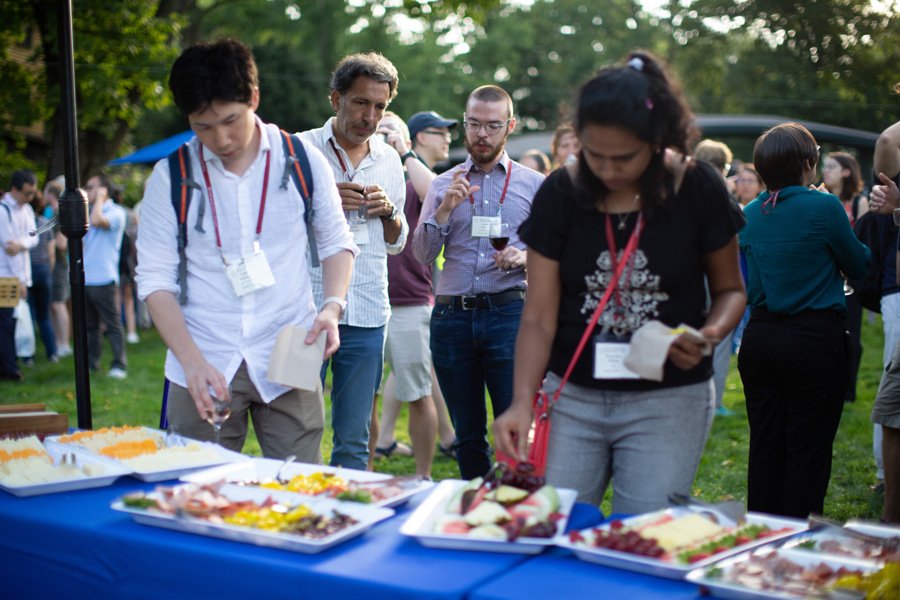
This NYT article related to a forthcoming biography of Watson provides context on Watson’s move from the “discovery” of the (right-handed!) DNA double helix to eugenics. Hopefully the book covers his leadership of the (beautiful) Cold Spring Harbor lab (where I visited, below) which become a bastion of scientific publication and conferencing.
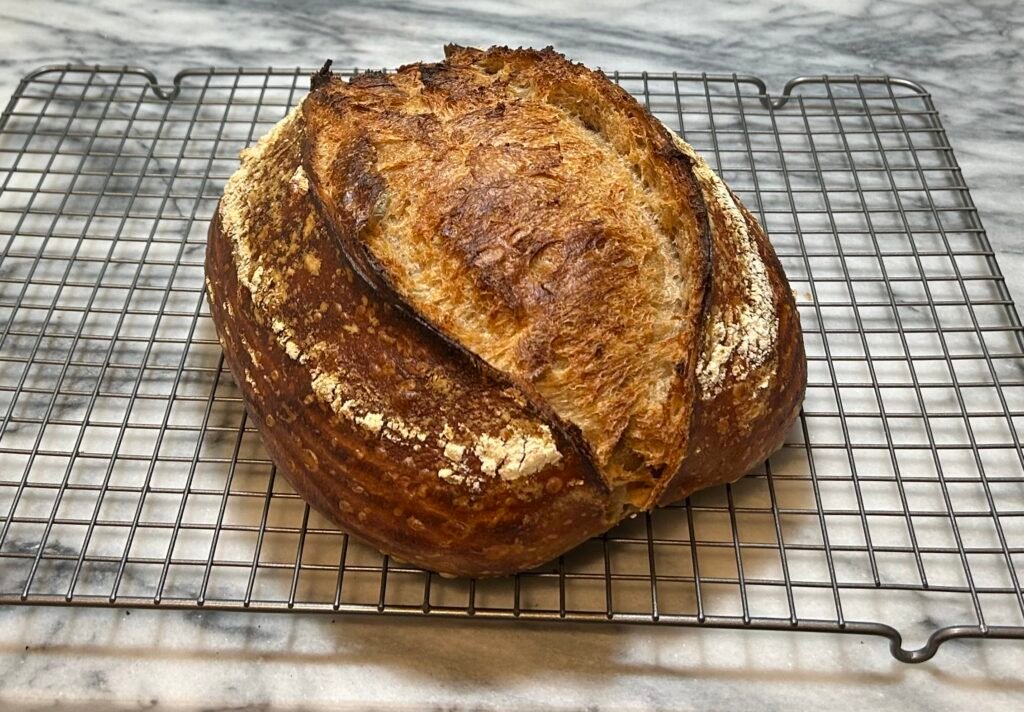
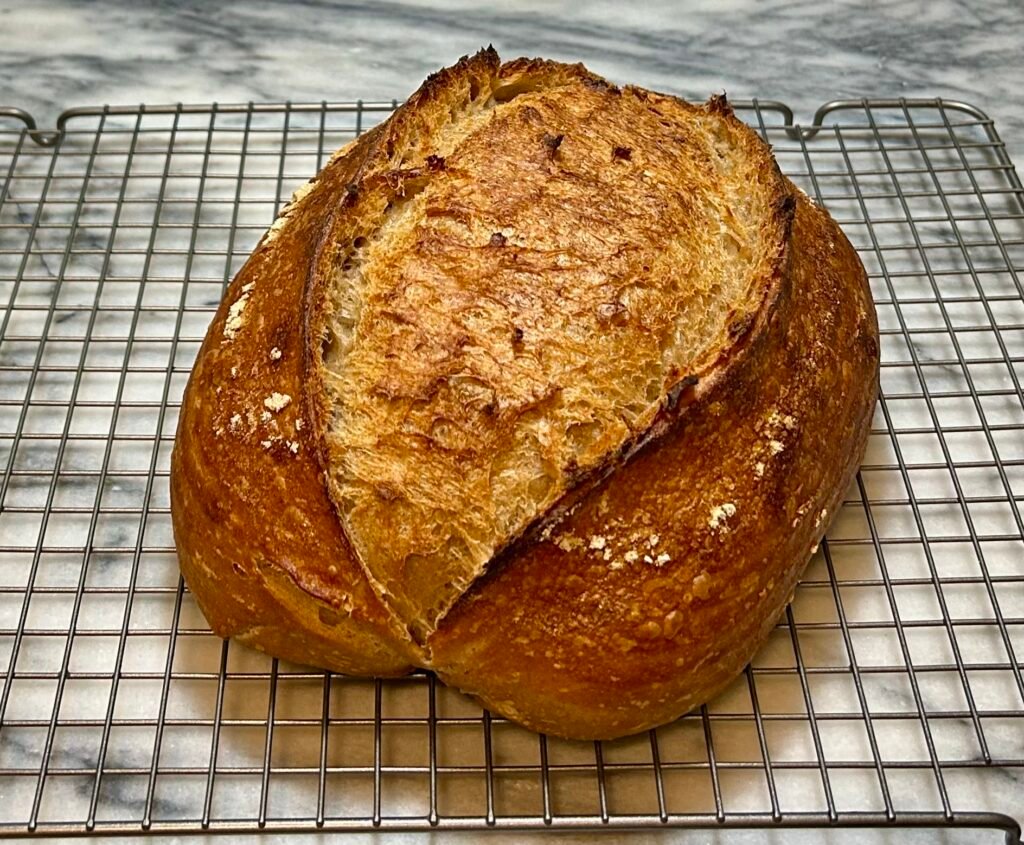
One of the better looking loaves that came from a very slow rise which I luckily had patience for as it turned out well and I still got in a long (8 mile) run before it got dark out.
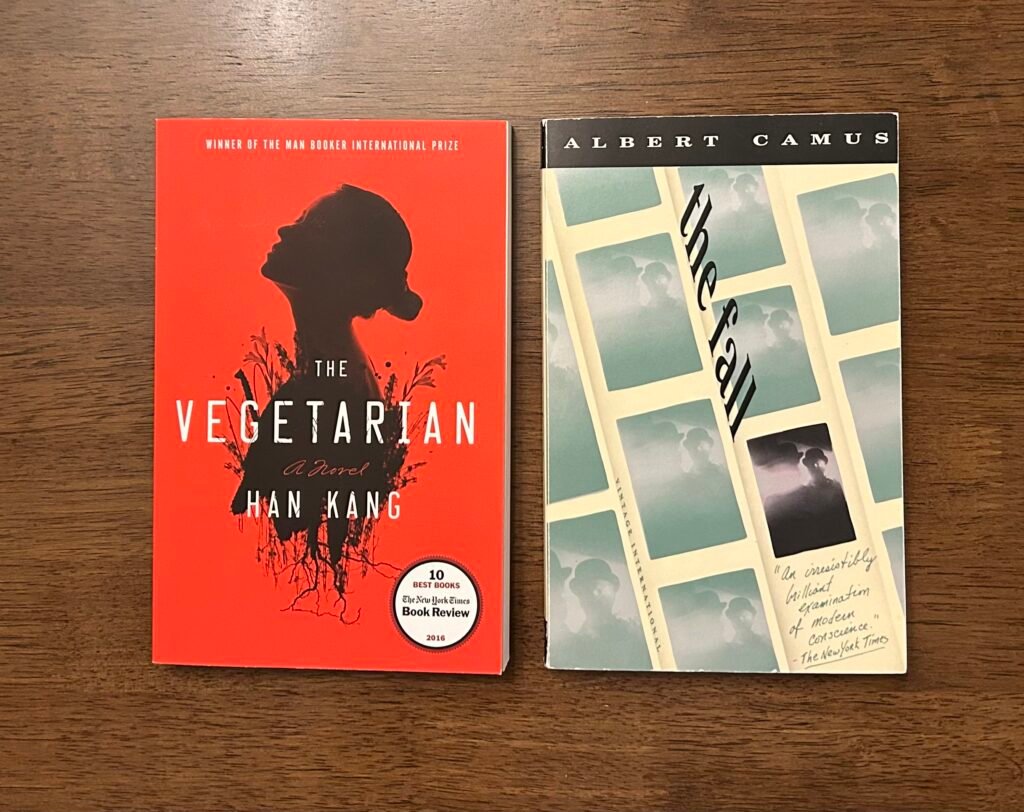
Two notable novels of crisis from two Nobel laureates.
“The Fall” is written as several monologue-conversations by a lawyer who “practices” at a seedy bar in Amsterdam’s red-light district. He recounts his early professional life as a defender of the needy both in and out of the courtroom. A series of events cause him to realize that all of these actions were an act that led to self-righteousness and the accumulation of status. He falls into debauchery, retreats from society, and becomes involved in a few minor military skirmishes to find reprieve. In the end, he must face the absurd notion that even the best intentions do not always lead to innocence and good deeds, with guilt being the burden of consciousness (and some Kierkegaard stuff).
“The Vegetarian” details the unraveling of a family when a daughter has nightmares and becomes a vegetarian. The novel consists of three parts consisting of 1) Yeong-Hye becoming a vegetarian and her marriage unraveling, 2)Yeong-Hye’s brother-in-law making an art film surrounding her, and his marriage unraveling, 3) Yeong-Hye and her sister at a psychiatric hospital while Yeong-Hye is being treated for anorexia and schizophrenia. This novel contains (in often graphic and unsettling detail) people reaching their breaking point when trying to manage societal expectations for family life and career success. The male characters all want control as they deal with intense pressure in the workplace. The women want to escape the expectations of managing a household often while also working. The lines between sanity and insanity become blurred as the conforming to social pressures requires unnatural exertion with the only benefit being an escape from scrutiny and (often) violence.
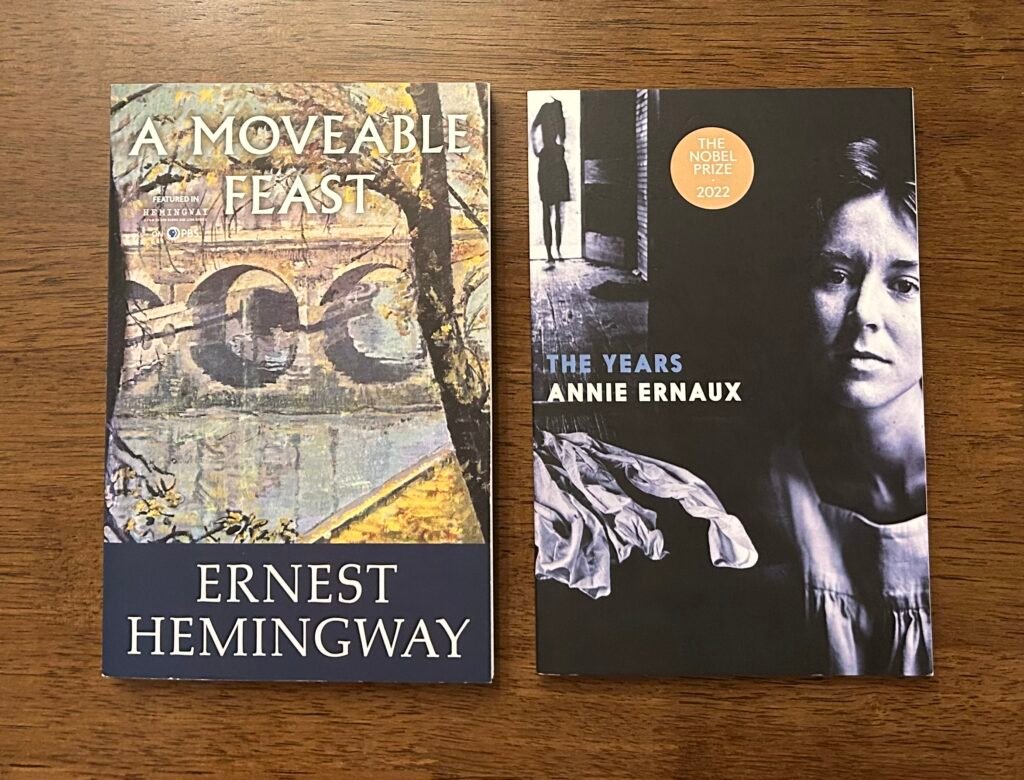
These are two memoirs of life in France from Nobel laureates, that’s why I read them together and also where the similarities end.
“A Movable Feast” details Parisian life (mostly) from 1921-1926, around the time that Hemingway (Hem) would transition from journalism to fiction writing and compose his first novel “The Sun Also Rises.” Unfortunately, this was not written during that time when Hemingways writing was at its sharpest and there isn’t a lot to tell beyond his associations with the other famous writers and artists. The (famous) section about (F) Scott Fitzgerald is the most famous and entertaining character study. The rest is a bit dull and often feels dated (Gertrude Stein) or self pitying (the starving artist who lives meagerly but refuses to “sell out”).
“The Years” is perhaps the best memoir I’ve read. This book narrates the author’s life from her youth after WWII, early adulthood, and middle age. Personal detail are not the focus of the narrative but rather used to describe the experiencing the history of each time period. Without sympathy, Ernaux describes working-class girlhood during the post-war rebuilding phase, sexuality before the legalization of contraception and abortion (as well as the legalization of both), the legalization of “no fault” divorce, family dynamics with adult children, and technological changes moving into the 21st century. This all takes place in ~230 (non-Proustian) pages that mix memories (both personal and consumerist) with stark personal and cultural analysis.
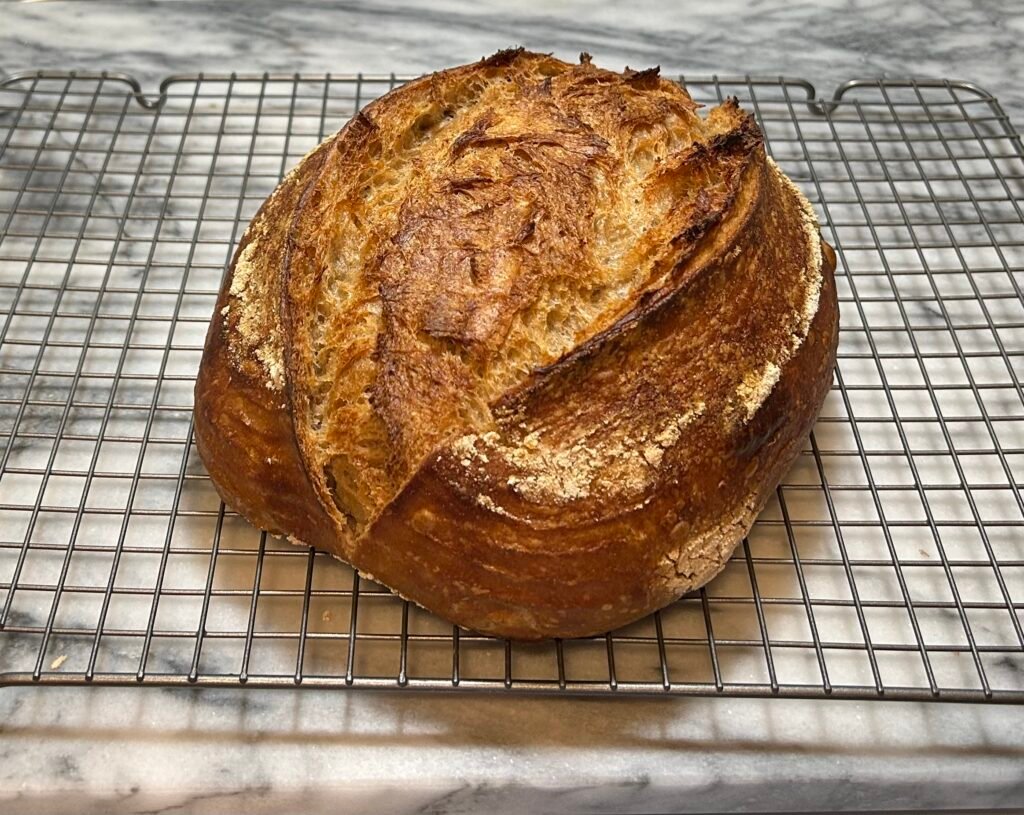
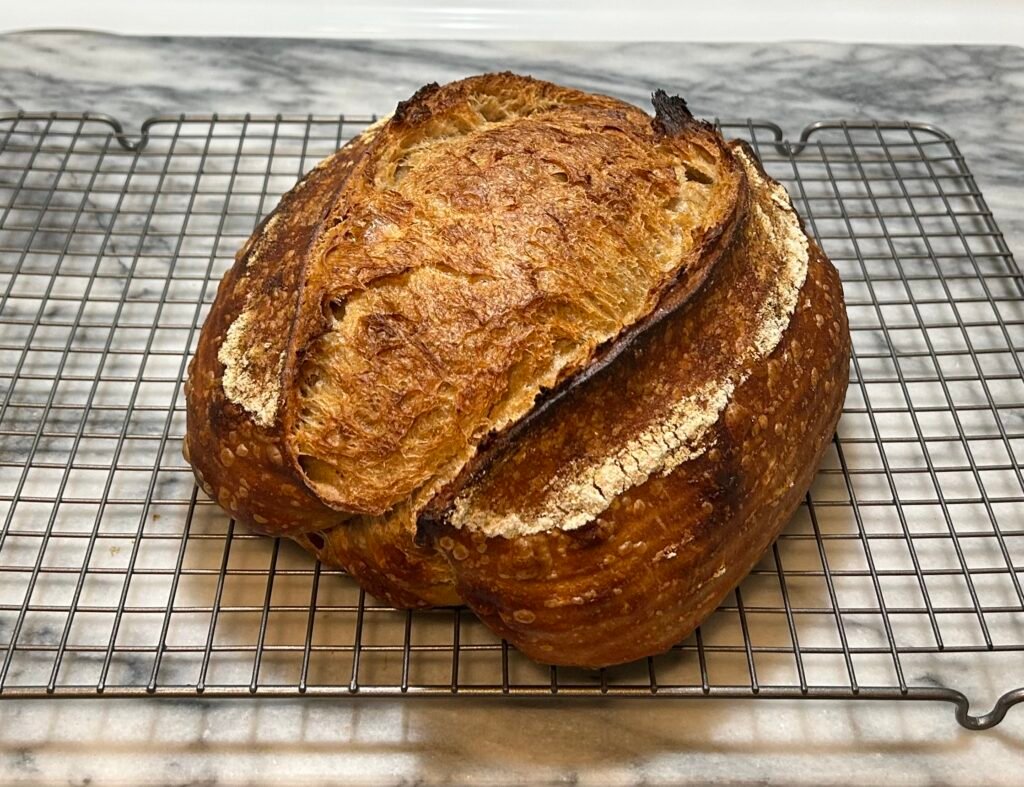
A matter of not judging a book by its cover–this loaf looks nearly perfect on the outside but is a bit small and feels denser than I’d like. The problem being that it just never really hit a phase of fast rising where the activity surpasses the detrimental effects of acid on the gluten. Decisions were made and a slightly dense loaf was chosen over a loaf that went too long and could no longer hold any shape.
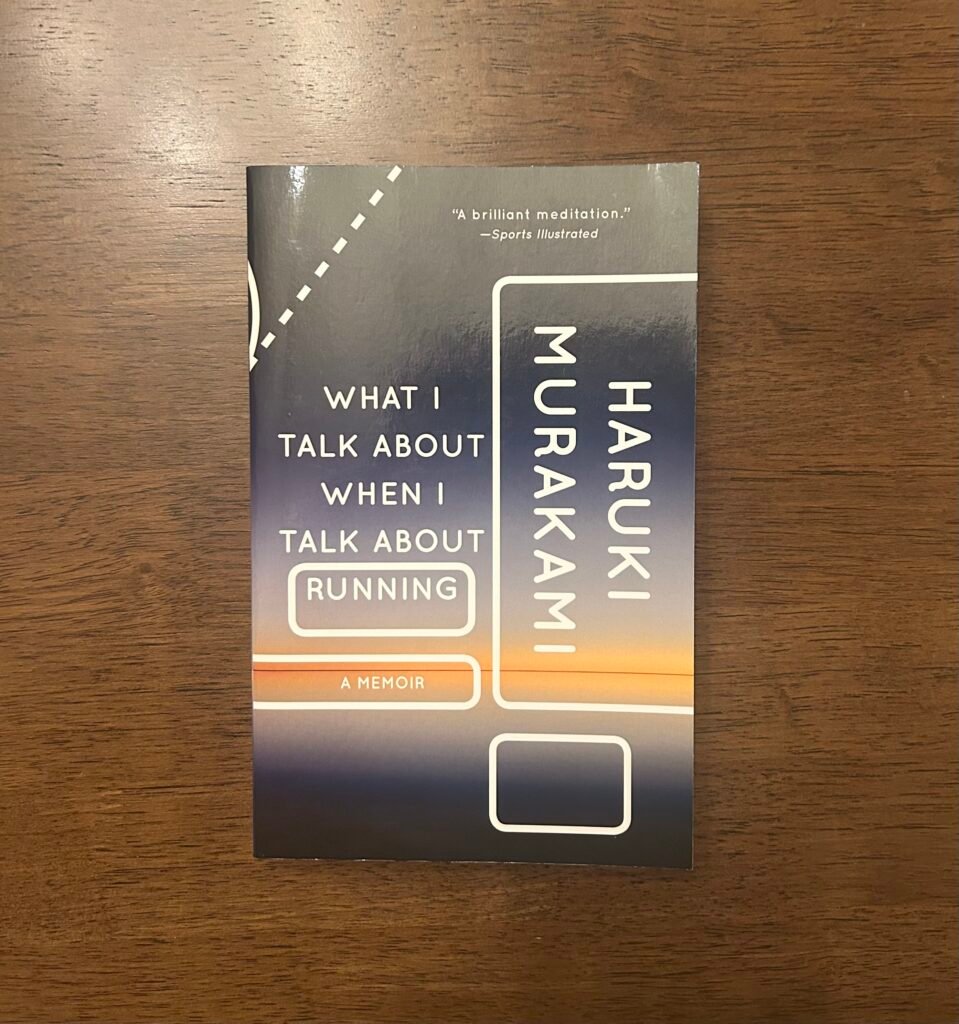
A novelist’s memoir about his ~20 years of running marathons.
I know a lot of people who have read and enjoyed this but I really don’t understand–it’s a man humble bragging about his marathon times and suggesting that marathon training might be a metaphor for life, somehow it lasts 200 pages. His novels get a lot of criticism but still have some redeeming qualities, this on the other hand…
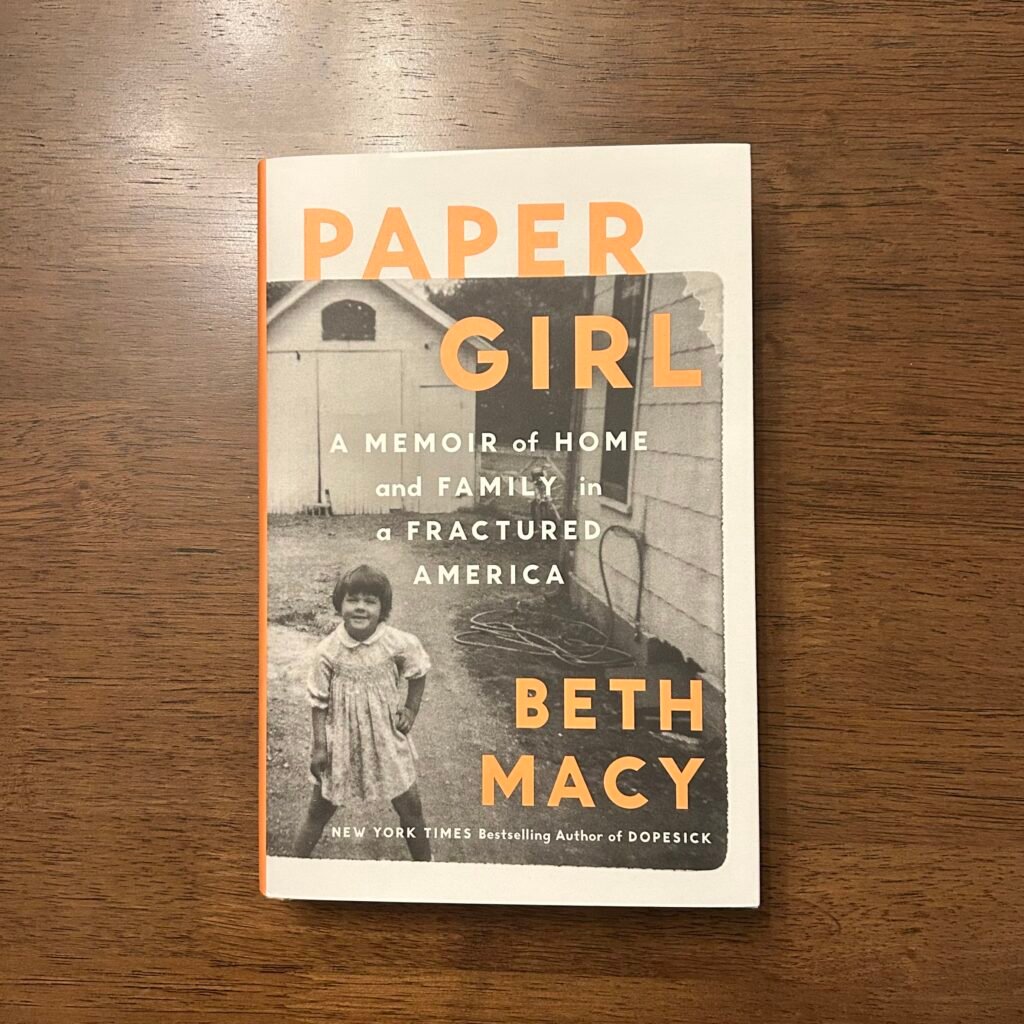
How can I judge a book written about my hometown and people I know?
Admittedly I was apprehensive to read this. I’m always a bit wary of writing seeking to explain the rustbelt as they tend to be overly reductive and turning into some variation of good (educated, liberal) vs bad (no college degree, conservative) and written almost entirely to make “good” coastal urbanites feel superior but not guilty.
Of course I can’t be fair here. What can be written in a few hundred pages that comes close to capturing people that I actually know. Is it even possible to have any sort of message without reducing people and situations into points within a narrative?
But the author is also from my hometown (but moved away long before most of the things described). Even I went away to college in 2016 and haven’t really spent a lot of time there since. So maybe we’re on the same page? But I can’t tell if it feels more despondent or I’m just used to living in a wealthy college town where public school students have to choose which Ivy League school to attend while I thought we were lucky to have AP classes at all.
I’ll try to be fair and say that Beth Macy tries to be fair even if it does generally fit the mold. People from Urbana are either 1) crazy Q-anon supporters, 2) apathetic, or 3) the overachieving saviors. Academics are brought in to explain the overall economic changes (oh and David Axelrod???). There is hope for the community but also resistance to any change that would require admitting there’s a problem. The solution? That liberals can’t just ignore these people they consider uneducated xenophobes without consequences (even if they’re generally painted as uneducated xenophobes). But have no fear, a few heartfelt conversations can end political polarization!
In many ways it was difficult to read about terrible situations that were probably happening when I lived there without noticing them. However, it’s all just a little too simple. Maybe this is what I expected–everything is just a little too clearcut for reality. The people doing good are not perfect saints and those standing in the way are not necessarily malicious.
I do appreciate that this book isn’t really ragging on my hometown and using it as an example of everything wrong with America (there’s an effort at objectivity and a clear affinity the author has for her time there and the connections still maintained). In many ways it isn’t really scratching below the surface which leads to too much of a narrative of good saviors fighting bad people in power.
Despite the authors criticism of such attempts, this does read like a book written for coastal audiences to understand while maintaining a sense of superiority. But fear not, she’s “from there” and highlights a few points of good against the apathetic and grotesque. Or maybe I’m a “country clubber” who just can’t face the reality because it wasn’t so bad for me. And maybe I would’ve felt quite differently if it didn’t seem to personal.
A few big points:
There is a strange acceptance that the only way to improve situations is to have a few saviors going above an beyond, fighting the powers that be to achieve any sort of improvement for the community. But teachers shouldn’t have to be social workers and social workers shouldn’t have to be parents. There’s almost no consideration that systems should be in place. Or about how funding for schools and many social services happens at the local level which means that there often aren’t resources for poorer areas. It should be strange to people living in larger cities that the resources simply aren’t there.
Many of the more extreme political views are linked to Donald Trump but the issues existed during Obama’s presidency. These views and the level of polarization/ideological isolation didn’t come from nowhere in 2016 but transformed from general resistance to actively bolstering a leader.
While there is discussion about how many of Urbana’s youth simply don’t seem to want to improve their situation because they don’t believe it will get better, there is very little discussion about this trend on a national level. While it may manifest differently in lower-income, rural areas, there is a general impression among “Zillennials” and Gen-Z that homeownership and financial stability are unlikely as the cost of living continues to increase but wages don’t keep pace. Or do they just “not want to work”?
What’s going on with the parents? Seemingly little attempt was made to hear their side. If things are really this bad then why are they unable to support their children? Why won’t they show up to work? What’s driven them to drug use?
A lot of the blame for political polarization is blamed on the loss of local news but very little focus is placed on social media which incentivizes inflammatory content which drives engagement.
Several minor points:
When focusing on the youth, it seems like everyone is living in abject poverty with a (step) parent who is either an addict or touchy. But it’s quite hard to tell how common this is and what outcomes look like for the children of more affluent (relative) youth. It just felt gratuitous at times.
What about the actual social services? It seems like one man is trying to fix everything but there’s only some abstract concept of CPS and really none of social workers. Are there enough? Do they have resources? This is brought up in a criticism of the youth center but not addressed.
What’s going on with the rest of the education system? Is everyone pointing fingers like the superintendent? Are things being held together by a truancy officer and a couple of people going above and beyond their job description (and maybe professional boundaries)? If students never show up how can more specific issues even be noticed/reported? There is only a brief mention of statewide regulations making this a slow process although it seems to be almost the crux of the issue.
A resilient community should also be able to bring back people who left for a degree. Despite interviewing someone working in economic development it’s unclear if steps are being taken to bring better paying jobs to the area.
Switched my starter to 100% whole wheat and it’s quite active even though it’s been a little cool inside.
This was a loaf where nearly everything worked out. Hydration felt just right. Developed well without much kneading. Shaped and fridged while it was still very active. (Although I didn’t fuss with tucking in the ends, clearly). Good spring and fairly even bake.