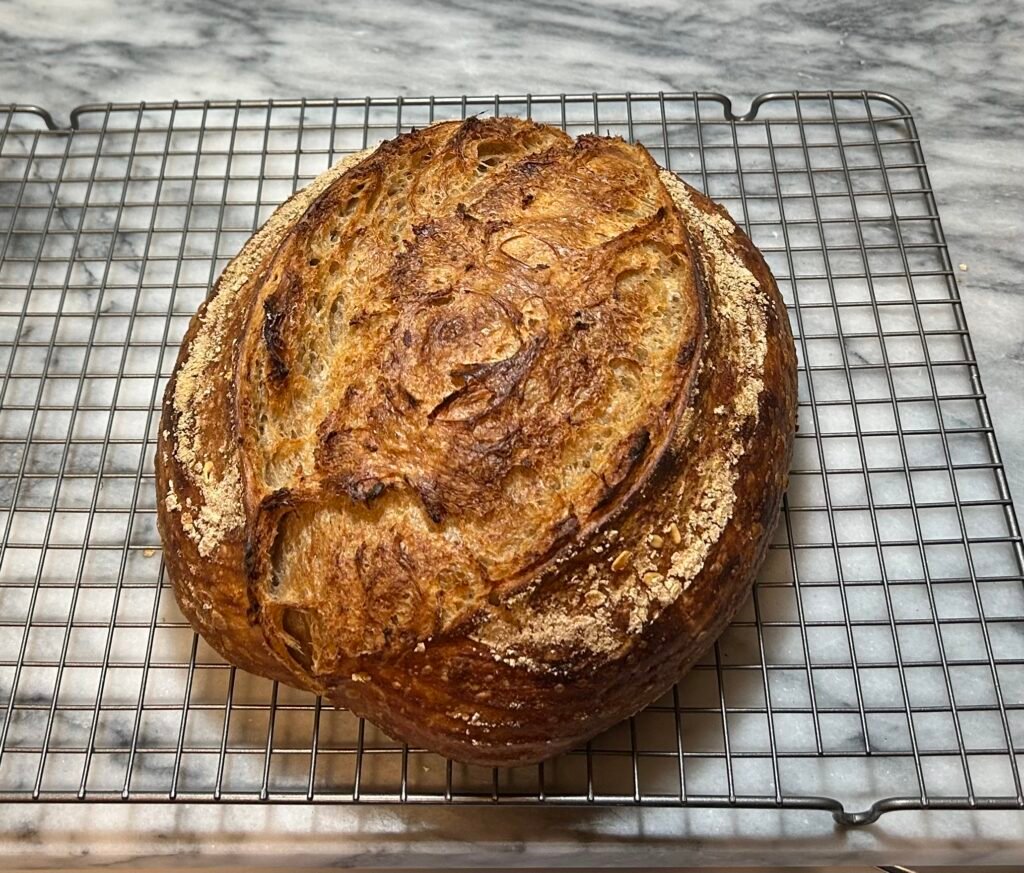
Back to the standard recipe containing ~35% whole wheat and not much else. A bit sluggish compared to the oatmeal sourdough but it’s also been quite cold and dry so it’s hard to assign blame here. A long bulk didn’t quite make up for a too short initial ferment.
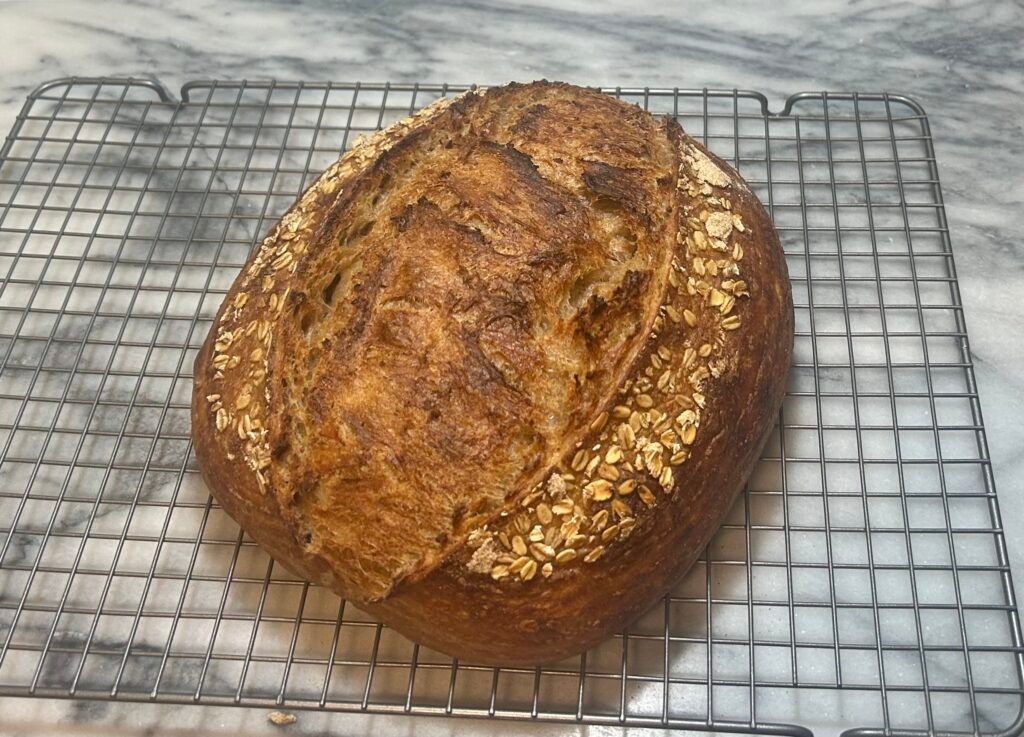
Once again an oatmeal sourdough (without any oats for a topping). Forgot about this before fridge-ing but wasn’t too far over–just a bit more “spread” than “rise.”
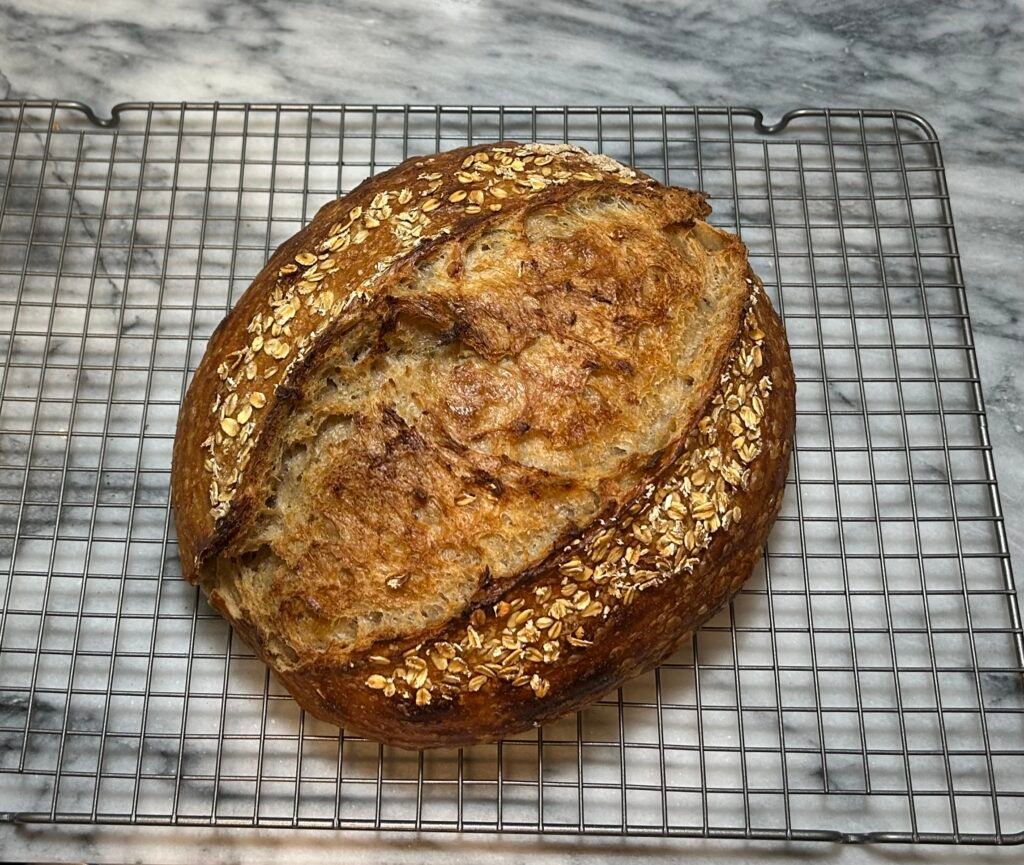
Another oatmeal loaf although not as good as last week. Feel like the fermentation got away from me a little (seems quicker with the oatmeal) and there wasn’t quite enough gluten to avoid a slightly flat loaf.
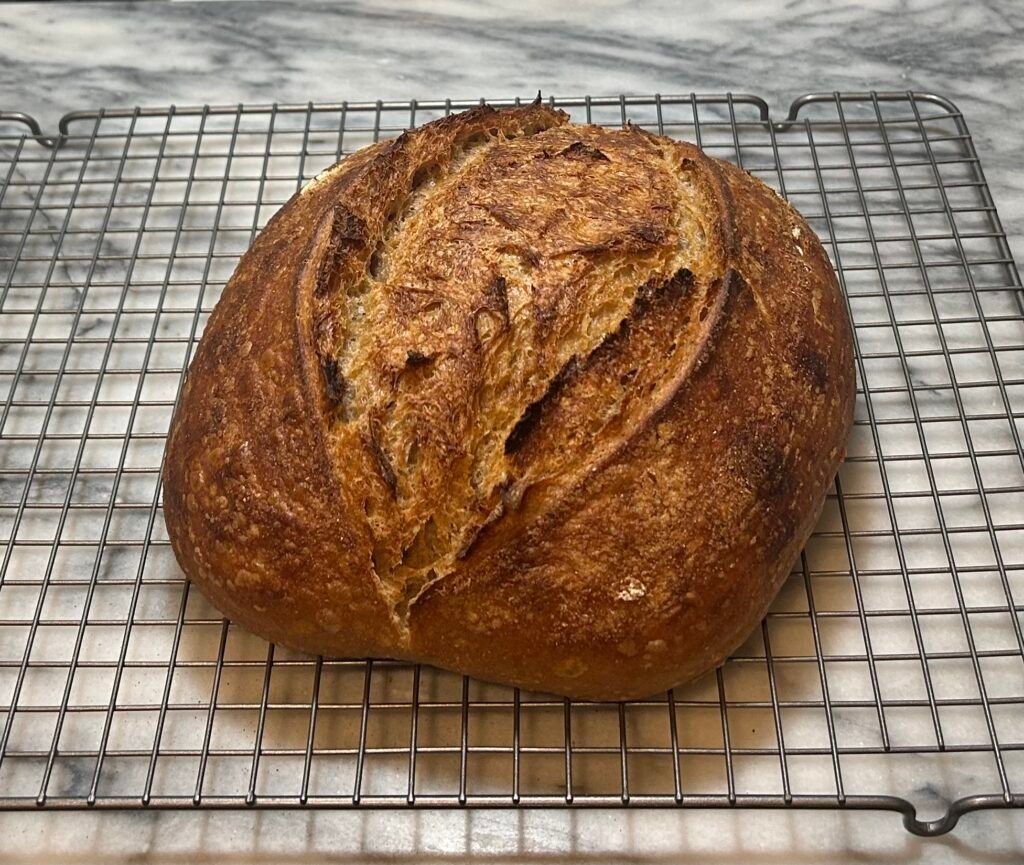
Oatmeal sourdough (recipe) that I’ve made several times before but never got such good results.
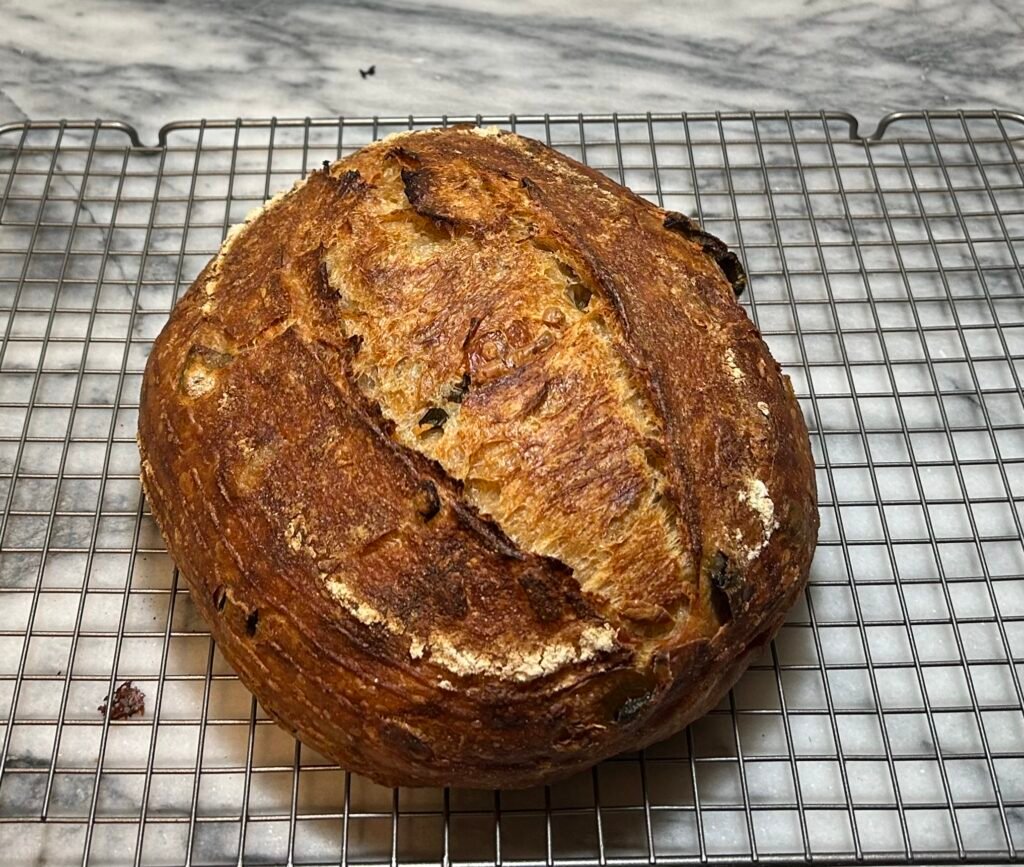
Recipe was rescaled and hydration was increased based on feel of the dough. Good feeling dough considering the somewhat sharp inclusions. Nicely fermented to produce a bubbly crust.
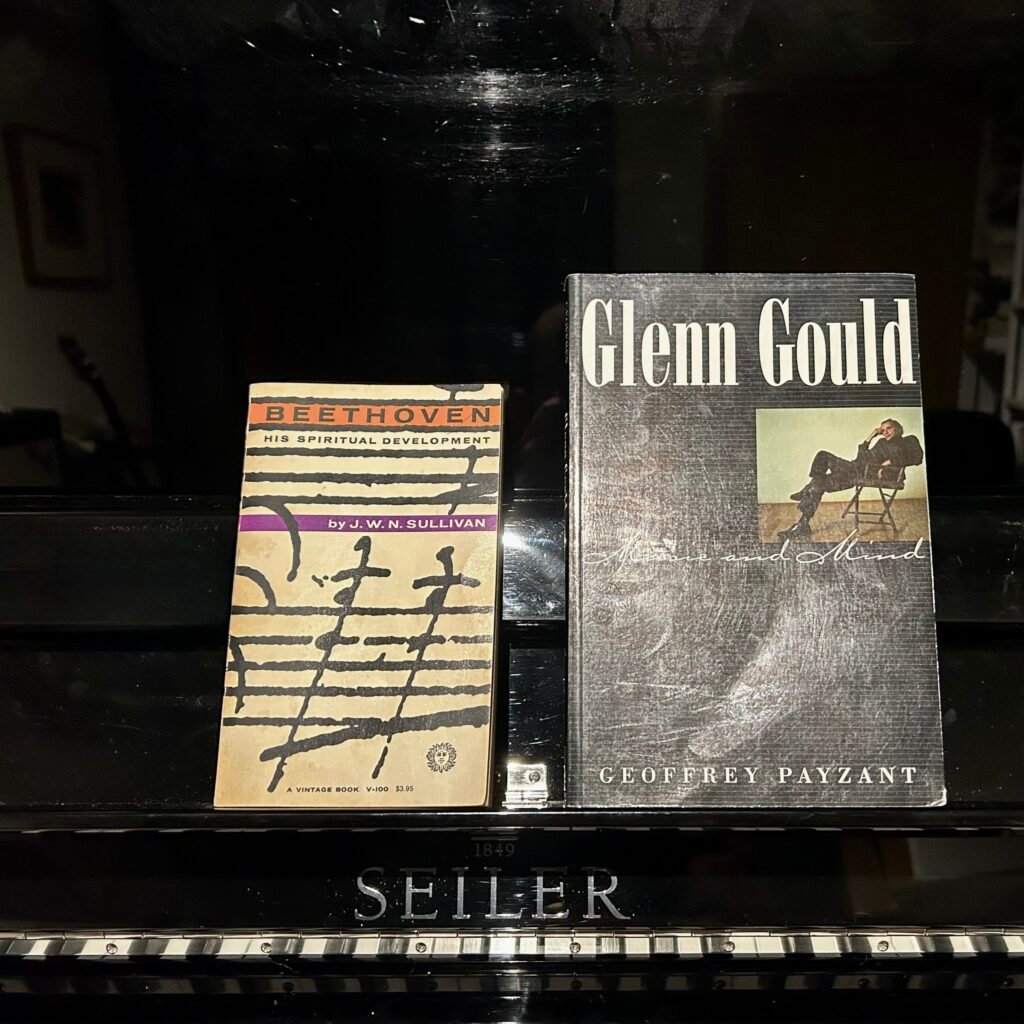
These are two classic biographies of the Canadian pianist Glenn Gould and Beethoven that focus on the intellectual/musical development related to their artistic output.
Pyzant’s biography of Glenn Gould contains little of the standard biographical detail but rather focuses on the writing and interview output of Gould in order to present his ideas. There are descriptions of Gould’s approach to repertoire, instrumentation, musical recordings (vs live performance and in terms of editorial splicing), and the essence of sound from the piano. Effectively, the ethos of Gould is summed up in ~150 pages.
This book is quite an accomplishment considering how unorthodox Gould was. It does no disservice toward how revolutionary Gould’s opinions were or how rigorously they were developed. In fact, this was so successful that it’s affected how I hear the piano as a percussion instrument (certainly a bit more than Mann’s idea of purity of harmony through a lack of sustain).
The Beethoven biography that Sullivan writes, on the other hand, is a work focused much more on how the authors ideas of how Beethoven’s suffering contributed to his musical development. While the compositions certainly developed in a few stages and his life was tumultuous as his fame increased and health decreased, this all feels little too narrativized. Sullivan wants us to believe that Beethoven, more than any other composer wrote music directly corresponding to his inner world and this is the reason for his greatness. This remains a somewhat popular opinion, but such simple yet encompassing claims rarely almost never capture the entire picture. In fact, this reads a bit like an artifact of its time and Beethoven’s influence on early modernism (through Strauss, early Schoenberg).
In trying to show the emotional depth of Beethoven’s music, Sullivan accomplishes what he criticized: imposing a “programmatic” sense of narrative and meaning to almost entirely instrumental music.
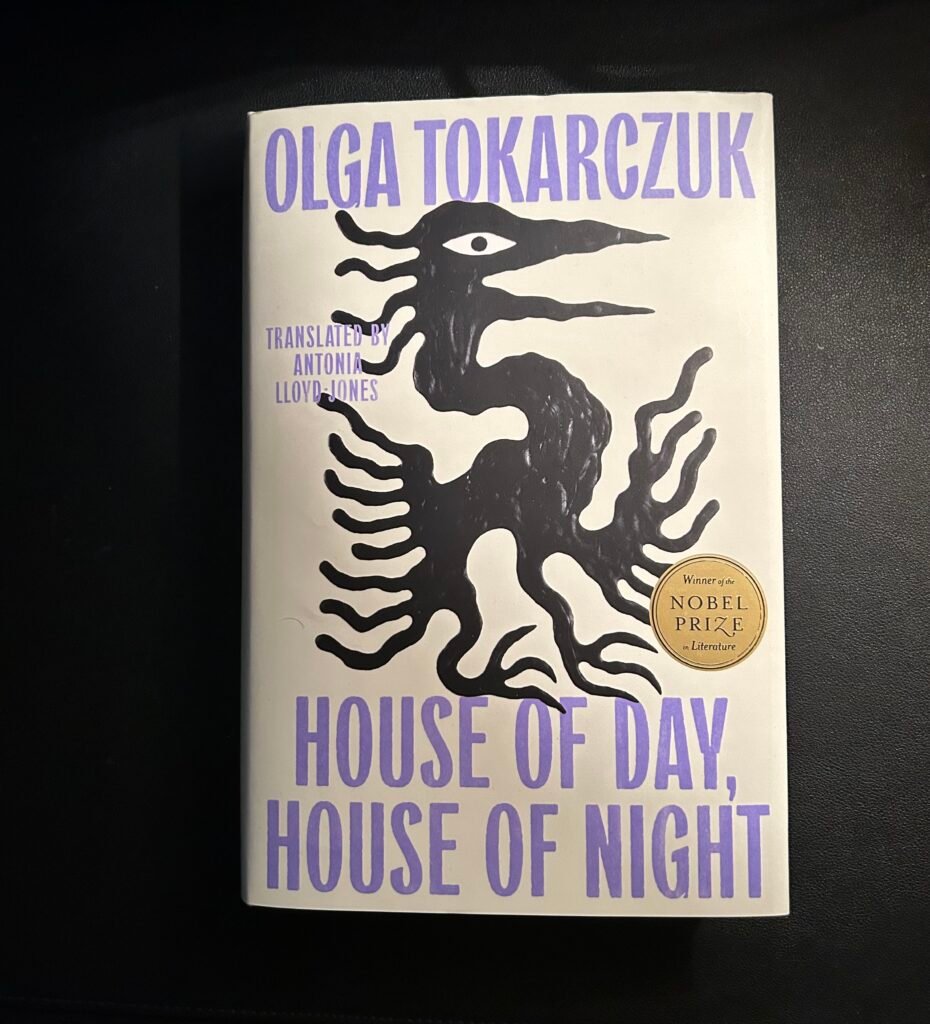
The inner cover reads “a novel about the rich stories of small places.” Huh? I mean it does include rich stories from a small place but it barely seems like the point (although I’m sure the marketing is easier). But this is a rich, expansive novel that feels much longer than it’s ~300 pages, in a good way.
To me, this is a novel about coming to terms with the world.
A main theme is the realization of estrangement from ourselves and the natural world. This is manifested in:
Dreams/dreamstate, which we can’t control and can barely comprehend (including symbols in nature, clouds, zodiac) but unveils our impressions of the world
Our physical bodies, which function in strange and horrifying ways until they don’t (and only feel present in the presence of others).
The complexity of the natural world which we can’t barely begin to understand because we focus on ourselves and try to prevent any realizations from getting through (contrasted with the pressure of market-driven work culture)
We turn to religion, mysticism, or some occupying drudgery to either try to make sense of the world or drown it out.
This is a rich, complex novel that I feel barely capable of truly understanding. It feels Nobel-caliber. It makes me want to read “The Books of Jacob” and “Flights.”
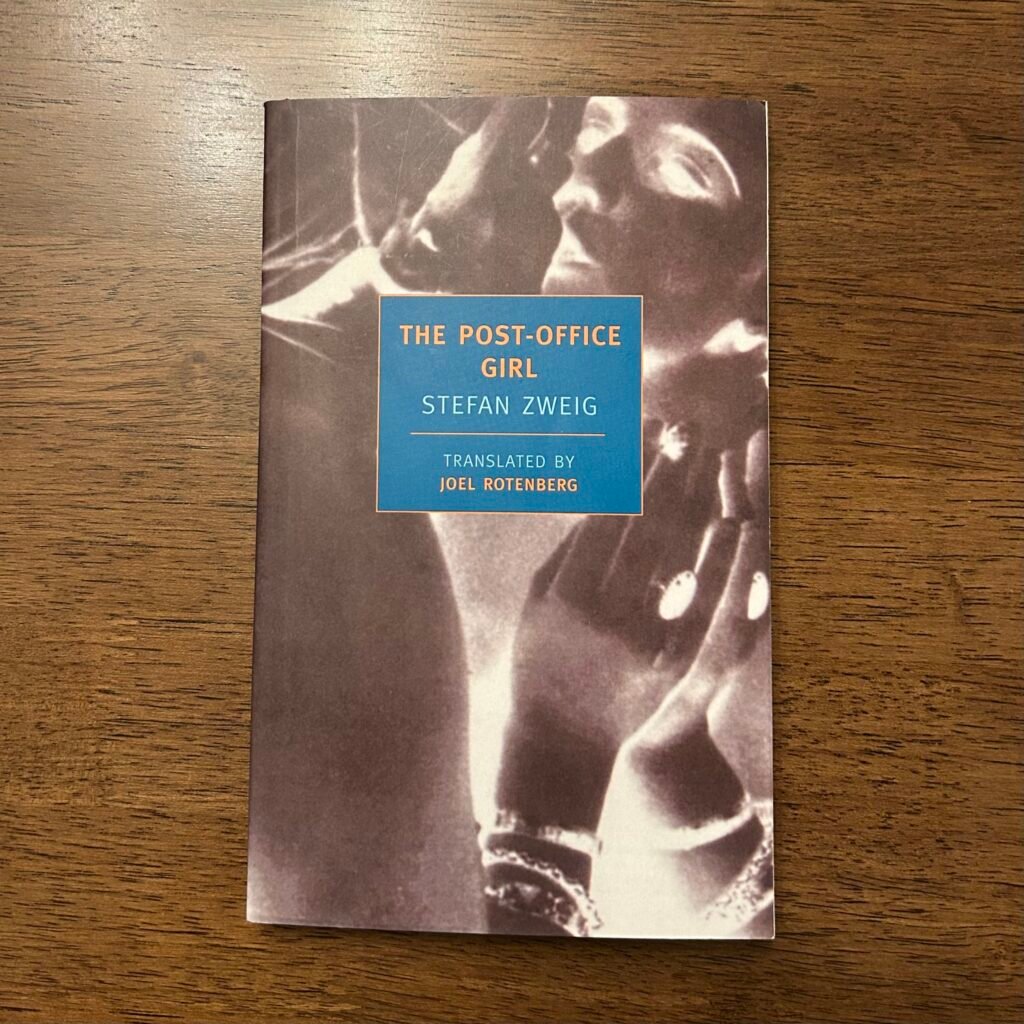
First published 40 years after the author’s death, Zweig novel provides biting commentary on the after effects of the First World War and on the psychological effects of poverty.
“The Post-Office Girl” follows Christine, who lives in near total poverty in order to support her sick mother on a small salary from a provincial post-office in Austria. While she had grown up somewhat comfortably in a merchant household, business had dried up during the war and inflation had left their savings nearly worthless. She feels her formative years (late teens and early twenties) were ruined by the war and its aftereffects which has left her lonely and nearing 30.
Things change when a telegram arrives from her American aunt who is visiting Europe and invites her to a short vacation at a hotel in the Swiss Alps. Her first vacation, Christine is apprehensive but agrees to the trip. Upon arriving, she is immediately self-conscious about her poverty compared to the other guests. Her aunt quickly buys her clothes, makeup, and a haircut to hide these effects. Christine quickly gains confidence as she is accepted into this world and sought after by several bachelors. She does as much as possible and enjoys herself greatly until cracks begin appearing in her persona. Fearing having her own past exposed, her aunt sends her back to her post early.
Back in Austria, Christine becomes bitter about her situation. Needing a short escape, she visits her sister is Vienna where she meets a friend of her husband, Ferdinand. He had fought in the war and been taken as prisoner into Siberia. After the war he was unable to get a footing and had been scraping by working odd-jobs and assisting an architect. They fall in love (or pity, or “trauma-bond”) feeling like they have finally found someone who understands the humiliating conditions that they are forced to endure. The two realize that a few moments of bliss won’t be enough to overcome their situation and begin plotting ways out.
Zweig’s posthumous novel certainly feels a little unfinished here. The first part (until Christine leaves Switzerland) feels complete and is brilliantly written. The second part feels rushed and a bit crudely written at times. The ending was not my favorite. Where Zweig excels, which is apparently in the first part, is in his ability to write very narrative-driven works that still manage complex psychological insight. Where other authors often manage this through long internal-monologue, Zweig is able to capture huge shifts in feeling through subtle shifts in tone and dialogue. At one point, I considered a novel great if it could provide a great story on the surface while also having plenty to pick apart below the surface–this and Mann’s Buddenbrooks are prime examples.
Zweig describes the humiliation of poverty in a way that feels both quite true and is quite sad to read. The reader feels for Christine as she encounters wealth beyond her imagination while wearing her best shabby clothes. Her anger is justified by her suffering through the war years thinking that everyone else was in a similar situation. Christine and Ferdinand both feel as though the life they wanted had escaped them as they struggled for so long just to eat. And to get ahead all they would need would be one of her uncle’s poker bets.