Finished some whole wheat flour and ended up at 30% instead of the usual 50. Whether from the different flour or a longer fermentation this was pretty bubble and light.
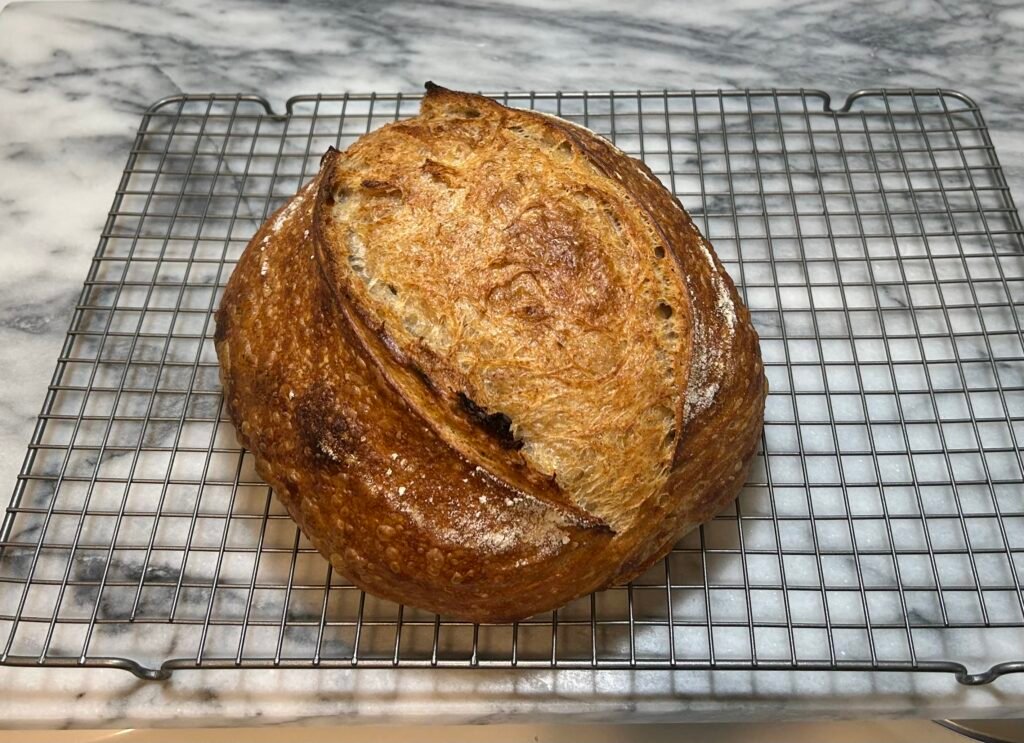
Finished some whole wheat flour and ended up at 30% instead of the usual 50. Whether from the different flour or a longer fermentation this was pretty bubble and light.
This short novel is a play of extremes. The plot is parodicly overdone yet the writing is quite casual (no quotation marks here).
It’s a detective novel about a middle-aged man fired from his job as a flight attendant without any real skills or prospects. He decides to become a private investigator and ends up getting tied up in a series of events with a minor political party.
This novel fixates on class and the role of financial difficulties in consuming a person’s thinking. In particular, when satellite debris crashes into a grocery store, Gerard notes that it’s inconvenient to go to a more expensive grocery store in his neighborhood because he can barely afford it and feels great shame being reminded of this regularly. In fact, his precarious financial state is exacerbated by his decision to become a private investigator (while barely being able to afford Bic pens for his office) but the thought of making money without having to deal with his blemished record is appealing. This desperation leads him into certain difficult circumstances that become nearly inescapable.
“Command Performance” is a great short novel that moves quickly but feels like it could be a full-length work. It’s a “genre” type work that’s both serious and playful.
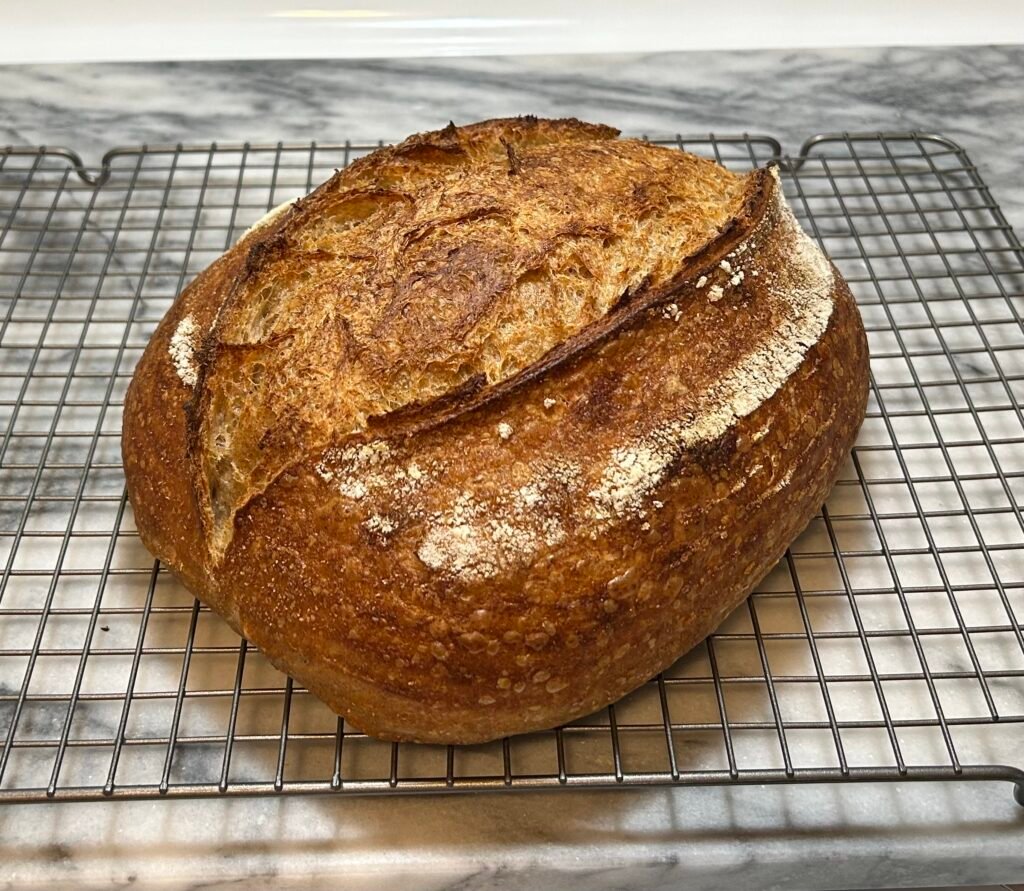
My standard loaf with a touch extra hydration which caused things to get a little slack.
An Egyptian-American woman moves to Cairo to explore her cultural identity. While there, she becomes involved with a man from the village of Shobrakheit, a couple of wealthy locals, and a British man. Between her eyes and those of “the boy from Shobrakheit” (unnamed, as is the narrator), we get an account of her struggles to fit into a place that is considered important to her identity.
This novel explores the feeling of otherness that the narrator experienced growing up as an Arab-America and particularly focuses on her early adulthood during the “great a-wokening.” This fairly academic understanding of culture, class, and gender clashes with her experiences in Cairo.
The third section (much maligned) is written as a writing workshop dialogue about the first two sections largely focusing on boilerplate responses to how the story portrays the people of Cairo and whether it is appropriate to “platform” certain characters/beliefs.
This novel feels like a confrontation between the American academic approach to talking about non-western cultures and the experience of living through them in a way that feels unique and perhaps uncomfortable and too complex (which is the third section).
This short novel gives a lot to chew on even with the main discussion already being played out at the end of the book. It felt a bit extreme at times but was still a well-done, important novel.
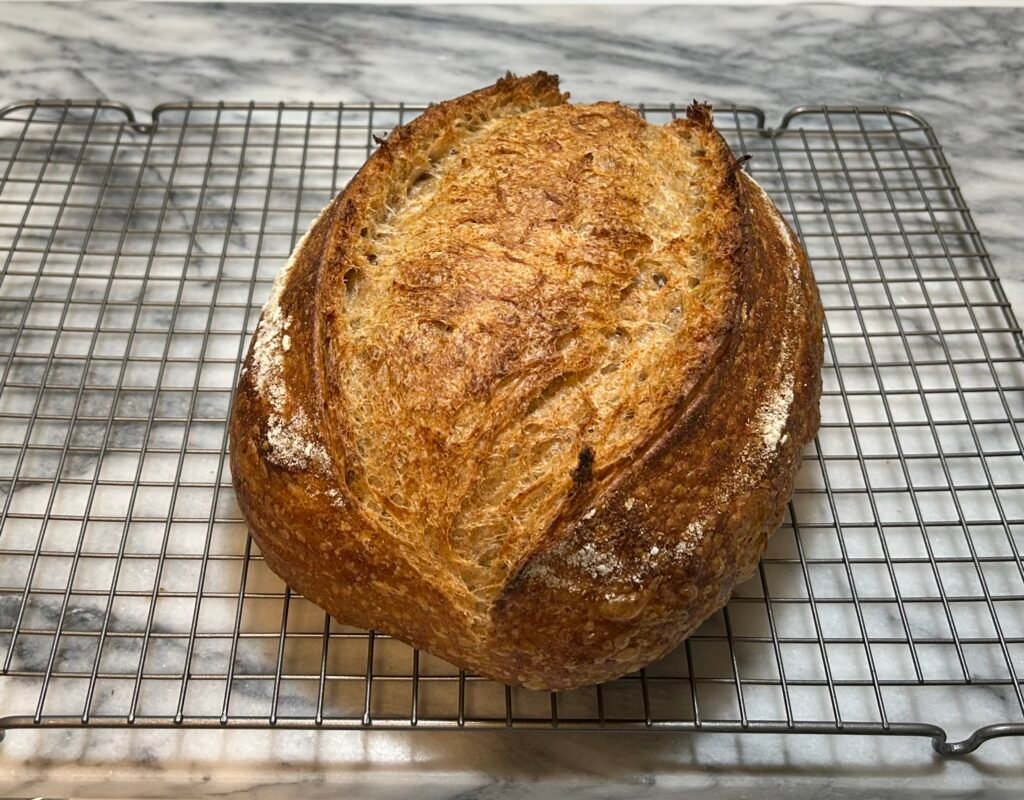
Back to the standard 50% whole wheat loaf. It was a cool week and got a little chilly inside which led to a fairly slow fermentation but it turned out pretty well all things considered.
I’ve been putting this off because I read it slowly and sporadically so it doesn’t feel quite as cohesive as it really should be (my fault).
Before reading this I had read “Slouching Toward Bethlehem” and “Play it as it Lays” (fiction). This is a more solidified style than “Slouching” although I almost miss some of those particularly personal and inconclusive parts. There is really a clear “Didion style” here in her use of repetition, dramatic scene changes mid-paragraph, and air of neutrality until dropping an important detail to provide a sharp clarity to the issue.
Sections 1-3 were certainly my favorite . In particular, “The White Album, “Holy Water,” “Many Mansions,” and “Notes Toward a Dreampolitik,” “Bureaucrats,” “Doris Lessing,” and “In the Islands” are among the best short-form writing I’ve read. These are particularly masterpieces of scaling minor details (Linda Kasabian’s dress) into comprehensive anecdotes and major events (Manson murders at large) into minor parts of the cultural milieu. There are also many hints of an almost giddy wonder at how the world works (especially in “Holy Water,” “Bureaucrats”) to contrast her usual cynicism at most cultural shifts (“The Women’s Movement,” “Bureaucrats” again).
While some pieces were better than others, Didion’s writing continues to feel fresh and exciting. Glad that I got the brick of collected works from Everyman’s (and will get the second half when it’s available).
A 1973 Booker Prize finalist reprinted by McNally following a bookseller–Hero Kinoull–who falls in love (romaticly) with her lover’s wife and then (platonically) his mother. But really the only main plot point is that there is a seminar to be held on Rococo art and an outbreak of Typhus.
This is really a novel following Hero’s departure from the seemingly serious masculine world of literature and preservation (she moonlights in book binding/restoration) and into the feminine worlds of volunteerism and gardening. All of these stages take place through the conduit of one of the other characters who she becomes obsessed with. Really it’s a novel about finding a sense of identity in a time that feels unmoored (written in the 70’s but set at the dawn of WWI). Hero fights from backward-looking cynicism towards some degree of hope.
This is a witty book of English style and French character. It may no longer be as transgressive or shocking as the early reviews seem to indicate but the core is still good. While the plot description seems like this may be a fun drama, it’s really a quite serious book (although still funny) with good writing (although it feels very “film-like” through fast scene changes and sharp transitions between reflection/poetic descriptions/dialogue).
A little departure from the usual with some oatmeal sourdough (recipe). There is cooked oatmeal inside as well as oats on top (which taste good but causes a mess). Gluten development is always challenging with oats mixed in which can lead to a flatter loaf but has a very moist crumb.

Sci-fi in premise (but really to the extent of “Never Let Me Go”) Haushofer’s “The Wall” follows two years in the life of a woman who survive an event that kills everyone outside of her wall. The wall is invisible but real and didn’t seem to exist before the event.
She is trapped in the mountains where she had been staying with a friend. She is accompanied by a hunting dog, a cat, and a cow. With few supplies or food she must quickly learn to provide for herself and the animals.
What comes out is a meditation on life without the imposition of modern expectations, obligations, and rushing about. What’s left is not only survival, but finding comfort and providing care. The inclusion of animals is particularly important as it shows a tendency towards the collective once human ego and social power dynamics are stripped away. The sense of freedom becomes quite skewed as does the sense of urgency and obligation.
(This novel has become somewhat relatable in unfortunate ways as we enter a third day without power)
This is a dense and reflective novel written as a continuous recounting of the preceding two years. In some sense the writing lacks conventional structure with only some elements of foreshadowing to provide momentum. It’s understandable given the subject but makes it less engaging.
“The Wall” is a well written, unique novel which has not gotten its share of attention.
Warmer weather and warmer temps inside had this one getting away from me a little. A bit over-fermented and under-strengthened. This is probably the sign that sourdough season will be coming to an end soon as it gets hot out.
